





“When in the course of human events, it becomes necessary for one people to dissolve salt and sugar in boiling chicken broth to season gefilte fish….”
—Thomas Jefferson … or maybe Ben Franklin (who remembers?)
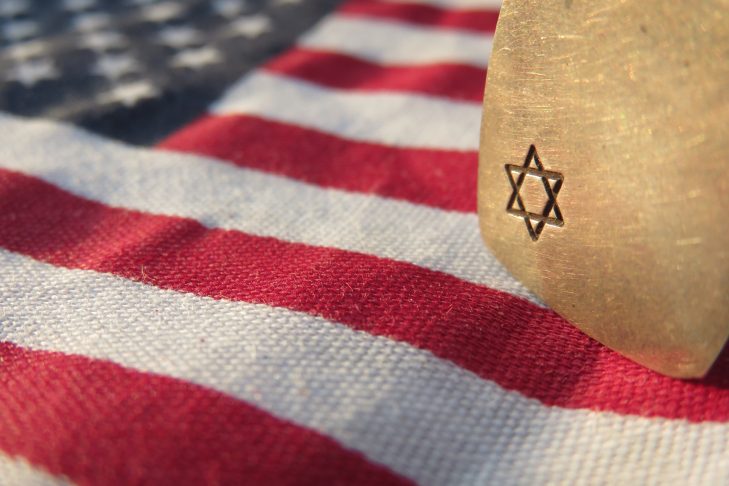
Welcome to our Passover seder, a festive meal celebrating both the liberation of the Israelites from Egyptian bondage 3,400 years ago, and the American colonies’ liberation from King George III’s ham-fisted rule 250 years ago (but there will be no kings and no ham tonight).
Our Revolutionary Seder consists of 13 steps, representing the 13 original colonies.
1. Kadeish or “Codfish,” which we eat to remind us of this staple of colonial nutrition. Following the Jewish ritual of squeezing multiple meanings into every jot and tittle, we also give thanks for the wild game that sustained the colonials (and we don’t mean a fast-paced dreidel match!).
Wine. The traditional Haggadah has us drink wine at four specific points. However, because this Revolutionary Seder is devoted to liberty, celebrants may have their wine whenever they want, provided they drink Madeira, favored by the Founding Fathers, and do not drink it all at once (we don’t want a “Wobbly Seder” full of “Foundering Fathers,” now, do we?).
2. Ur-chatz or “Our cats,” which reminds us to remove our pets from the dining room so we can eat in peace. (Also, with Ashkenazi Jews, allergies!) Following the traditional multiple meanings approach, we also pause to honor the dogs that worried the cats that were brought to the colonies to kill the rats that ate the malt that lay in the house that James built. Amen.
3. Karpas or “Carcass”: We cut up and eat the body of a tasty mammal (not human) to honor the many animals slaughtered to feed and clothe the colonists. While we’re at it, let’s give another shout-out to the wild game that also sustained them (and we don’t mean a hot night of Jewish geography, either).
4. Ya-chatz or “Your cats,” which reminds us to also remove our guests’ pets. (And why the heck did they bring them? This isn’t an animal shelter, nor home for wayward emotional support animals.) Meanwhile, we pour ourselves another glass of wine and recite this blessing:
Praised Art Thou, O Lord, Ruler of the Universe, who has blessed us with grapes in their season; and Who has filled our fields and streams with codfish and wild game, though not in that order; and Who, alas, has also given us cats, so many cats. Bummer! Amen.
5. MAGID or “Make America a Great Independent Democracy”: We recognize that, much like today, our forefathers wanted to Make America Great (in their case, not “Again,” but “For the First Time”), except without terrorizing immigrants (since almost 100% of their forebears were immigrants).
The Four Questions. We now perform a centerpiece of the seder, when the youngest child chants the Four Questions (which should really be called the less-catchy “One Lead Question and Its Four Increasingly Counterfactual Subparts”). Here’s how the new, relevant versions appear in our updated sestercentennial Haggadah:
Why is this rebellion different from all other rebellions?
1. In all other rebellions, no one hung lanterns in the Old North Church to alert rebels whether the British were coming by land, sea or air (coach class). Why in this rebellion did we hang two lanterns, when even one was a fire hazard?
2. In all other rebellions, no one wrote dense and lengthy declarations of why they were rebelling; they just rebelled. Why in this revolution did we need a “Declaration of Independence” that was over 1,300 words long and included terms no one understands, like “usurpation” and “consanguinity”?
3. In no other rebellion did a patriot regret having “but one life to lose for my county.” Why in this rebellion did Nathan Hale wish that he had more lives of his own to give (like a cat)? Or, wait, did he mean he would have preferred to lose more other peoples’ lives (like Washington at Fort Necessity)? TBD.
4. Are the men’s soles, which these are the times that try, ghostly spirits or boot bottoms? Or both?
6. Rachtza or “Rock star,” which celebrates how in modern society the familiar heroes and personalities of yesteryear, e.g., George Washington, Ben Franklin, Hubert Blaine Wolfeschlegelsteinhausenbergerdorff, have been replaced by contemporary celebrities and influencers, many Jewish, such as Natalie Portman, Mayim Bialik and Drake.
7. Motzi Matzah, the centerpiece of the menu, reminds us that symbolic but tasteless foods, like matzah, have been a staple of holiday eating from time immemorial (think Christmas pudding and mince pie).
The leader now breaks off and hides a piece of matzah (called the “afikomen”). Later the leader will invite the kids to find it and hold it for ransom, since the seder can’t end until the afikomen is eaten. This is a popular trick for keeping kids interested in the goings-on, though when children are old enough to demand bearer bonds or crypto, it has run its course.
The Four Sons: A popular seder reading describes the four types of children who each inquire about the seder in their own way. The original four are: The Wise, The Wicked, The Simple and The One Who Can’t Ask (probably because his mother kept saying to him, “Please, don’t ask.”). But our semiquincentennial Haggadah substitutes for these a new revolutionary four: The Patriot, The Redcoat, The Minuteman and The Loyalist.
The Patriotic Son asks, “When in the course of human events does it become necessary for one people to dissolve the political bands which have connected them with another?”
Answer thus: “A decent respect to the opinions of mankind requires that … oh, heck, Wednesday, alright? Wednesday!”
The Redcoat asks, “Can’t someone compose a decent rock opera about King George? Or maybe Lord Cornwallis, which, by the way, rhymes with ‘tallis’?”
Look him in the eye and answer: “I am NOT throwing away my shot!” Then lecture him about the laws of Passover, and how nice it would be for someone to compose a completely rap Haggadah, including lyrics like, “Then come the plagues/and the killin’ of the babes/Old Pharaoh was furious/Ain’t revolutions glorious?!” Like that, but better.
The Minuteman asks: “Freedom from Egyptian band-aids? What’s wrong with their band-aids?”
You should reply, “That’s ‘bondage,’ not ‘band-aids,’ you nitwit!” By calling him “nitwit” you emphasize that it was a dumb question and encourage him to be more like The One Who Can’t Ask.
As for The Loyalist, he asks: “What meanest thou by ‘unalienable Rights’ to ‘Life, Liberty and the pursuit of Applesauce’? Also, shouldn’t that be ‘INalienable’?”
To him reply: “You’re as wise as your brother, Mr. Band-Aids, over there. That’s ‘Happiness,’ not ‘Applesauce,’ you dumbass.” Then rebuke him further: “And ‘UNalienable’ is acceptable King’s English, smartypants!”
8. Maror, aka “Hear Ma Roar,” allows us to pause the seder to make sexist jokes, swap rumors, and tease mom. In this quarter-millennial Haggadah, we recommend sharing unsettling truths about the Founding Fathers, for example:
- George Washington was a major flirt, not just a major general.
- Ben Franklin (also a flirt) asked the Royal Academy of Brussels to investigate farting. (Refer to Franklin as a “Founding Farter” and hear Ma roar!)
- Alexander Hamilton was probably Jewish; describe him hunting for the afikomen and debating the merits of light versus dense matzah balls with Aaron Burr (whose real name, you should suggest, might have been Aaron Burnstein and see the fireworks this causes).
So much for insuring domestic tranquility, haha.
9. Koraich or “Koraich.” Who knows, just some Jewish thing.
The Ten Plagues. But this is as good a time as any to recall the “Ten Plagues” that the Lord rained upon the Egyptians to persuade Pharaoh to let the Jews leave Egypt (blood, frogs, etc.). It has become a modern Passover tradition to proclaim an original “Ten Plagues” of all sorts of things: hunger, climate change, Jewish cooking, colonoscopies, etc. Therefore, here are Ten Plagues the colonials endured during the Revolutionary War.
- “Bloody Backs” aka “Redcoats” (or “Lobster backs,” but no kings, no ham, and definitely no lobsters!).
- “Frogs,” symbolizing those ambitious but incompetent Frenchmen, such as Preudhomme de Borre and Roche de Fermoy, who came to make their names in the American Revolution (since the names they had were barely pronounceable).
- Smallpox (with a shout-out to typhus, influenza, malaria and dysentery), which together killed seven times more soldiers than did the actual fighting. Truly, infectious men were mightier than the sword.
- Hail. Or rather, Hale, Nathan Hale, the American spy whose patriotic dying words (“I only regret that I have but one life to lose for my country”) caused many less articulate spies to quit before capture, fearing they had nothing half as memorable to say. (Note that, unfortunately, Patrick Henry’s less elegant “Give me liberty, or give me death” wooed few of them back.)
- King George III, whose Intolerable Acts prodded the colonies into rebellion (as they said of George, “When he reigns, he prods.”).
- Taxation without representation (though the colonials wouldn’t have been crazy about taxation with representation either: Face it, Americans don’t like taxes).
- Benedict Cumberbatch. Ha, kidding, but I love saying “Cumberbatch” … plus, he’s a Brit! But I obviously meant that farkakte traitor, Benedict Arnold.
- Articles of Confederation, which failed dismally to make the colonies a nation (though, frankly, the U.S. Constitution isn’t faring so well these days either).
- Bunker Hill, a big defeat. Wise leaders substitute Breed’s Hill, because, frankly, that’s where the battle actually took place.
- Spelling: With a Declaration of Independence rife with inventive spelling—“Represtative”? “Affembled”? (not to mention a clown car of signatures)—it’s a wonder we became one nation, under Dog.
10. Shulchan Orekh: What we’ve all been waiting for: The Meal. Jewish hosts go all out to lay an impressive feast, reminding us that our ancestors also liked to pack on the calories, but could do it without getting fat or taking Ozempic … perhaps because they worked like slaves, and ate like this maybe once or twice a year.
11. Tzafun or “So fun!”: Finally, the children search for the hidden afikomen, which is passed around and called “dessert.” Since having a broken piece of matzah actually be the dessert would probably cause a mini-rebellion of its own (as they say, “Hell hath no fury like a seder guest receiving only matzah shards as dessert”), a platter of REAL desserts is usually brought out, too.
12. Bareich or “Bellyache.” Many guests, who now regret that the hosts provided a decadent dessert platter after a multi-course meal (and that they took such advantage of it), take turns relieving themselves … which helps explain why many seders go on for hours.
Meanwhile, we stall for time with another glass of wine and recite another blessing:
O Lord, Ruler of All, Who helped our ancestors kick King George’s butt, and Who, generally speaking, raiseth up the weak and downtrodden, and bringeth low the high and mighty, and moveth laterally the betwixt and between: May it be Thy will to give unto us the fruits in their seasons, and the seasons at their appointed times, and our appointed times as setteth forth in our Google Calendars; and may there be a time for every porpoise under Heaven, and for their cousins the dolphins and belugas, so we can stop worrying so much about the cats. Amen.
13. Hallel Nirtzah: Hallelujah! We made it to the end—except that, for many Jews, this is all repeated a second night! (In those home, hear Ma roar … or, more likely, weep.)
This post has been contributed by a third party. The opinions, facts and any media content are presented solely by the author, and JewishBoston assumes no responsibility for them. Want to add your voice to the conversation? Publish your own post here. MORE