





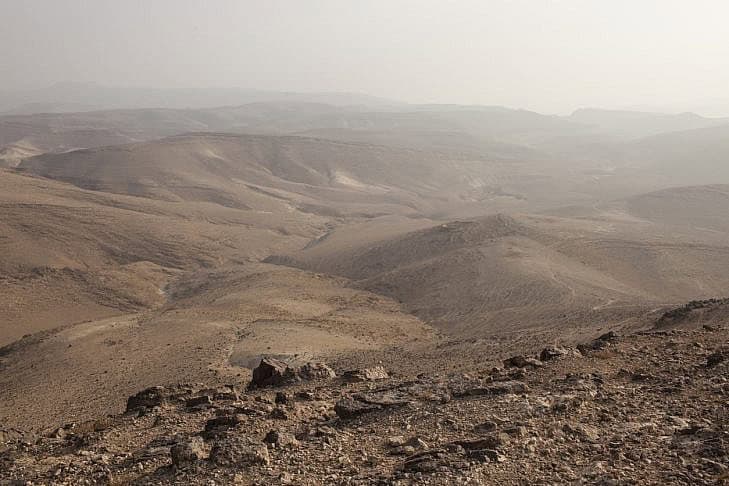
This week, as we start the Book of Devarim (Deuteronomy), Moses begins his final speech by looking back at the Israelites’ journey from Mount Sinai to the edge of the Promised Land on the eastern shores of the Jordan River.
Early in his remarks, he utters a line that’s easy to miss but impossible to forget: “It is eleven days’ journey from Horeb to Kadesh-Barnea” (Deut. 1:2).
You read that right. Eleven days. That’s how long the journey should have taken, but instead, it took them 40 years.
The immediate, obvious, and painful question is: Why did it take so long?
The short answer is that change—real, deep, personal change—takes longer than you think. Always.
On their desert journey, the Israelites weren’t just on a walk to freedom and nationhood; they were in the middle of a transformation from a traumatized group of freed slaves into a people ready to live with responsibility, purpose, and faith. That kind of change didn’t happen quickly, nor did it take place linearly. The physical route may have been short, but the inner work? That was the long part. They weren’t ready until they were ready.
This idea is uncomfortably relevant today. As of this writing, around 50 Israeli hostages remain in Gaza. For their families, for the people of Israel, for Jewish communities around the world, the days have stretched into weeks, months, and now nearly two years, and they are still there.
The Bring Them Home necklaces that so many of us once wore with fierce hope now feel heavier each day, weighing us down. The yellow pins and ribbons feel more like symbols of mourning as their colors start to fade. The posters and prayers for the captives become more desperate. The world has moved on, the hostages are still there, and urgency remains, but the energy is harder to summon.
The physical distance from Israel’s border to the places where they’re likely being held is only a few kilometers…it would take minutes to get there if the borders were open and the way was clear. But this isn’t a problem of geography; it’s one of complete brokenness. Political, moral, and human brokenness. And so I ask: Why is it taking so long?
We find ourselves in a macabre and nihilistic stalemate, with the hostages being used as bargaining chips in a war with no mercy. Negotiations rise and fall. Ceasefire deals are floated and walked away from. Hamas plays games and says “no” every time. Israel faces impossible choices. And the families continue to hold vigils, march in the streets, pray, plead, and hope that someone is still listening.
This, too, is a wilderness.
In the Talmud, when the rabbis can’t agree on a ruling, they end the debate with one word: Teiku. Literally translated, it means “impasse” or “stalemate,” but practically it means “we don’t know what to do,” so we will wait for Elijah the Prophet to come one day and sort it out. Intractable problems get postponed, and everyone walks away (mostly) happy.
At multiple times in Israel’s history, temporary solutions and unresolved core issues have been baked into a status quo that operates like an eternal teiku, where no one is winning and all parties are happy to sit quietly under less-than-ideal solutions without making any concessions. Jews of a certain age (myself included) can reflect on the punting of “Final Status” talks for the better part of half a century now, which is a big teiku not for Elijah, but for Israeli and Arab governments in a future time. This inertia also explains the lack of a constitution in Israel, the ongoing debate about the haredi draft, and other domestic issues that are far easier to leave unresolved than to actually solve.
But the stalemate of the hostages is a vastly different stalemate than those of the Talmudic academies, Israeli domestic issues, or Israeli-Arab ones. In this case, teiku doesn’t feel like a scholarly shrug, it feels like a heartbreak. A frozen, paralyzing standstill. A place where nothing moves, even when everything must.
Sometimes the simplest things, like bringing innocent people home, become impossibly complex, riddled with politics, fear, pride, and mistrust. Make no mistake: I’m not here to say both sides are equally to blame—the war could end today or any day if the hostages are returned. But I am here to say that something, somewhere, has to give. Something has to shift if we want to bring them home.
And while I want to believe the answer is close, perhaps just around the corner, or maybe just 11 days away, I keep finding myself wandering through a spiritual desert, unsure how to hold onto hope.
And yet.
The wilderness in the Torah wasn’t just a punishment. It was also a tool of transformation. The Israelites didn’t just suffer there; they learned. They received the Torah there. They buried the old version of themselves and began becoming something new.
Maybe that’s the lesson for now. Even as we grieve, we must keep striving to not just bring the hostages home, but to rebuild the values that were shattered when they were taken and that remain shattered as they’re held, forgotten by much of the world.
I don’t know when Elijah will come, and I don’t know when this teiku will end. But I do know their redemption will not come from waiting. It will come from relentless, courageous effort.
Devarim teaches that even a long, painful journey can change us. The Israelites weren’t wasting time, they were becoming ready. That truth doesn’t erase the pain, but it does give it purpose.
Our purpose today is not to give up. Keep speaking their names. Keep pressuring leaders. Keep showing up. Keep hoping. Because the promised land of their return isn’t just possible…it’s essential and it’s existential.
The “11-day journey” is still out there, haunting us. But if history teaches anything, it’s that the shortest route is rarely the best one. Real change, whether national, spiritual, or personal, takes time.
May it come soon, and may they come home.
This post has been contributed by a third party. The opinions, facts and any media content are presented solely by the author, and JewishBoston assumes no responsibility for them. Want to add your voice to the conversation? Publish your own post here. MORE