







Oct. 7, 2025, marks two years since the attacks on Israel and ensuing war. For so many of us, these two years have been filled with relentless fear and despair. Throughout this time, I have looked to the voices of artists to find beauty, nuance, and reflection in the hopes that their visions might offer us all a bit of respite.
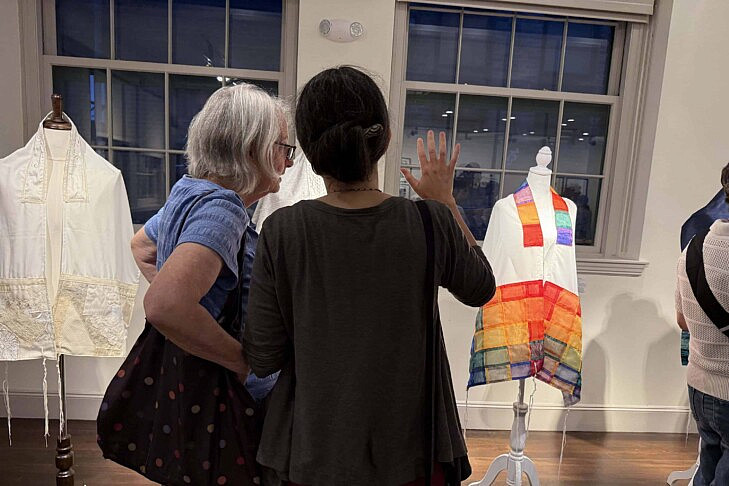
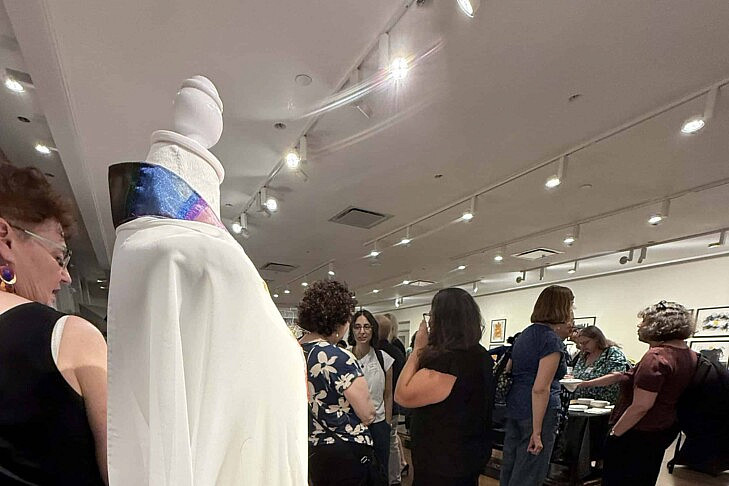
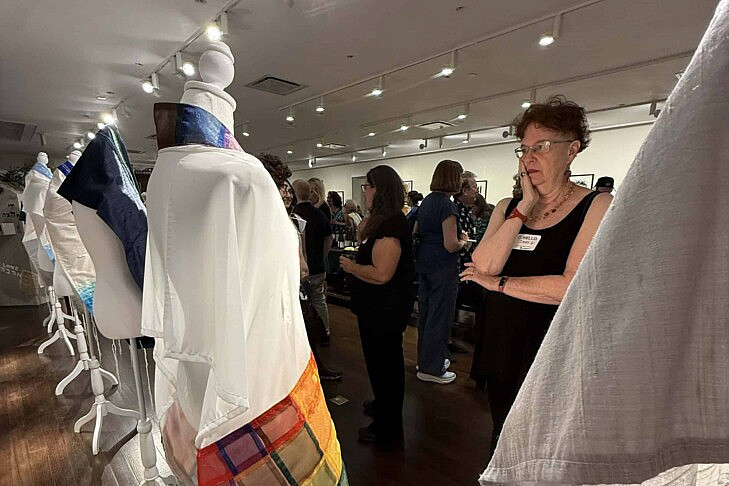
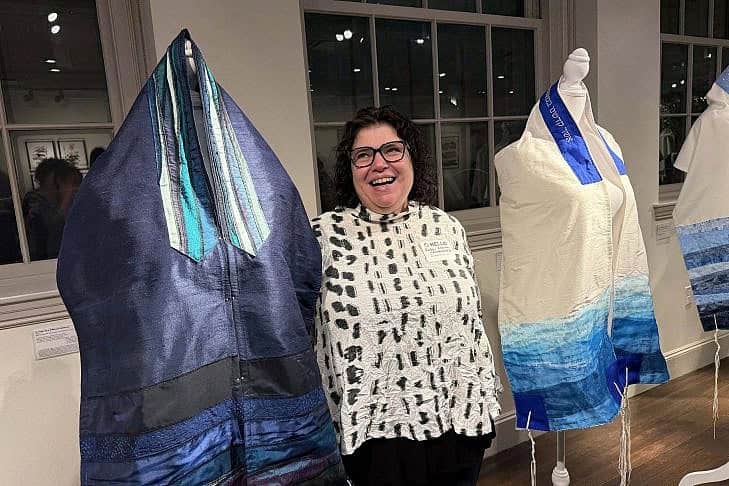
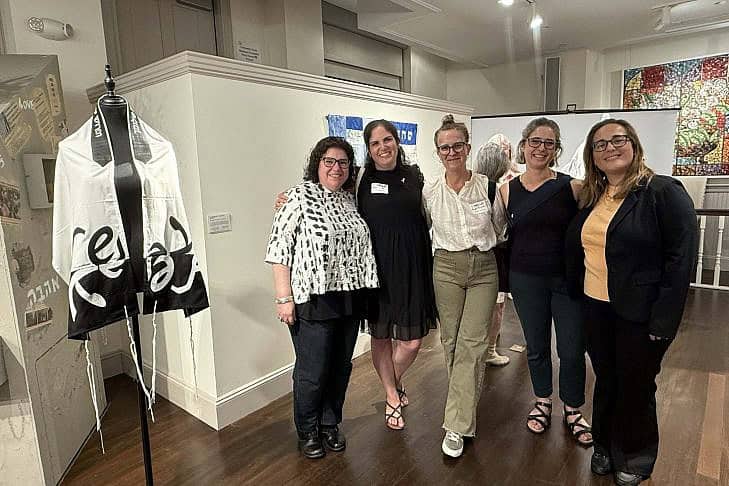
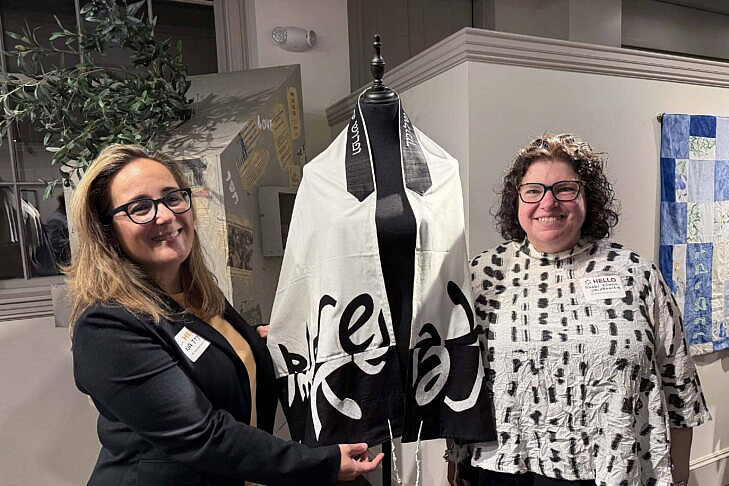
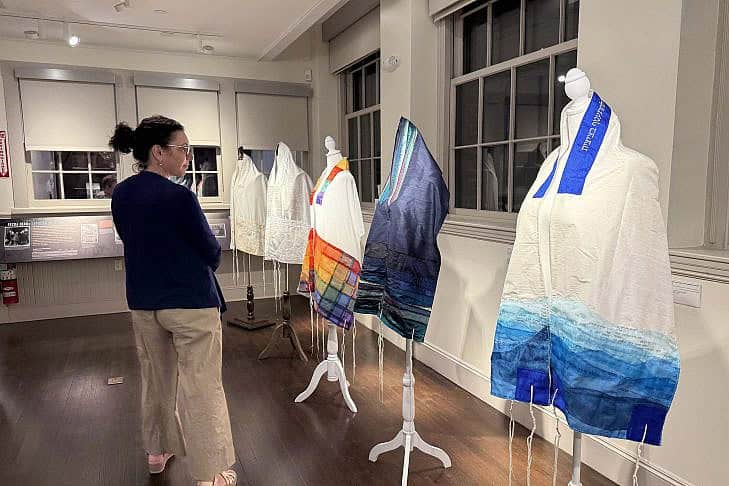
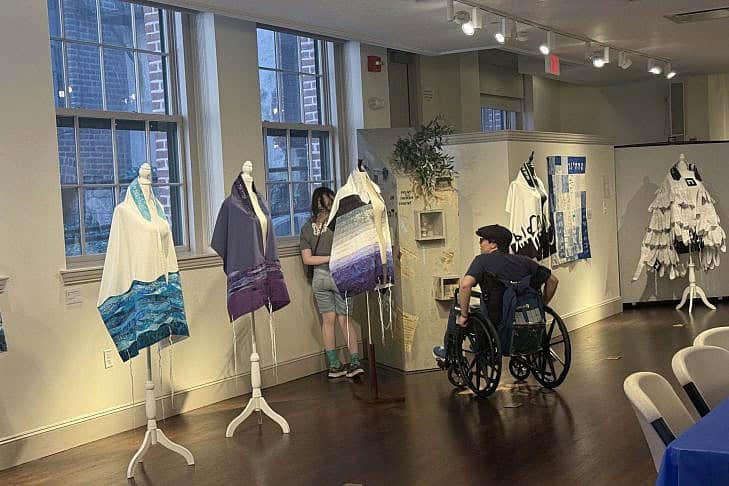
In this search, I connected with Rabbi Eliana Jacobowitz, the beloved Israeli artist who leads Temple B’nai Brith in Somerville. When not leading from the pulpit, Eliana spends time at her sewing machine, creating talitot, choppot, and other works of art from repurposed textiles. Her work is multilayered in texture, color, and meaning, offering a physical look at how we might reimagine ritual.
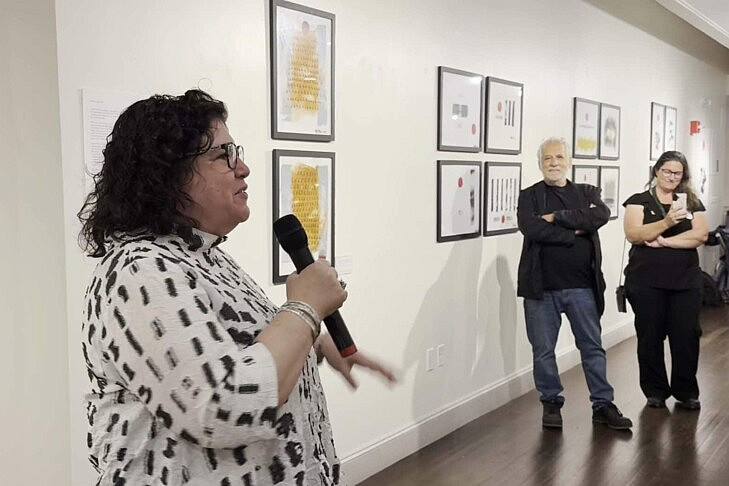
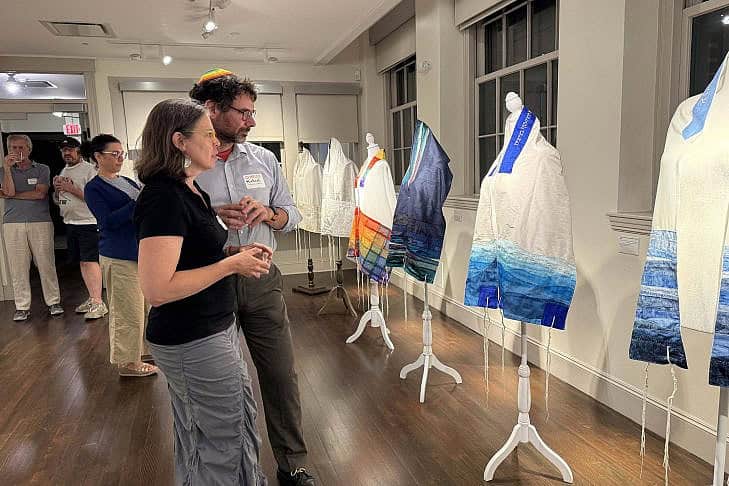
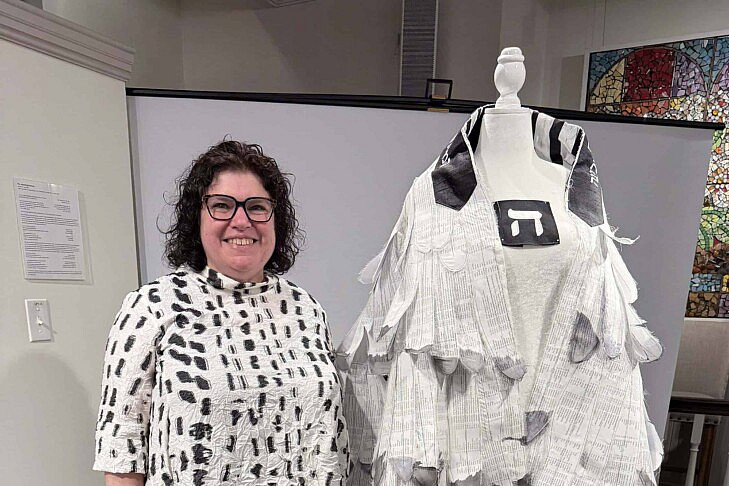
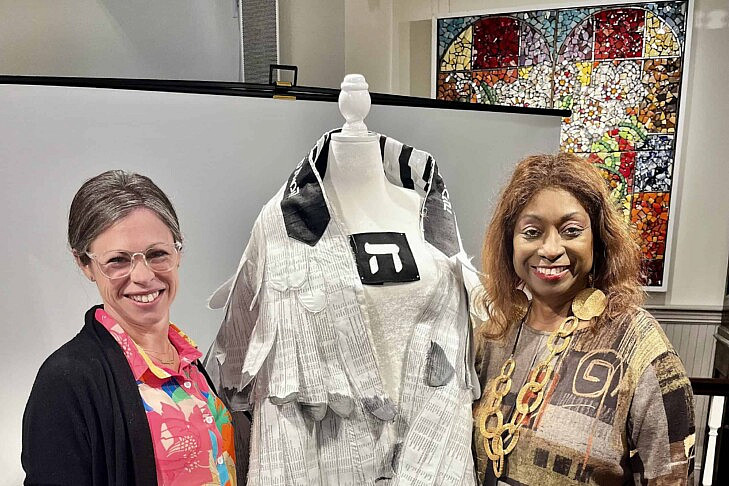
As she and I planned the “Holy Threads” exhibit for fall 2025 at The Vilna, she shared that she had been struggling with a new piece inspired by the Shechina, the inner dwelling divine presence, as a means of processing Oct. 7. Driven by this show and desire to share this work with audiences, Eliana completed this new work for this show. The story behind it is both devastating and inspiring, the ultimate Jewish story of resilience. In this video, Eliana walks us through the process of making this piece, exploring the process of transferring ink to fabric, dying, and more to create this incredible piece.
Prompted by the video, I asked Eliana to go a layer deeper into the Shechinah, and to share some thoughts on how and why she made this powerful piece. Here’s what she had to say:
On Oct. 7, the murderers did not distinguish between Jew, Muslim, Christian, or Hindu. Anyone living in Israel was seen as having cast their lot with “the Jewish state,” and in their eyes, deserving of death.
But grief has no religion. Loss has no religion. Every person murdered that day was created in the image of God. I have to believe the shelter of the Shechina’s wings extends to all who need it, regardless of faith.
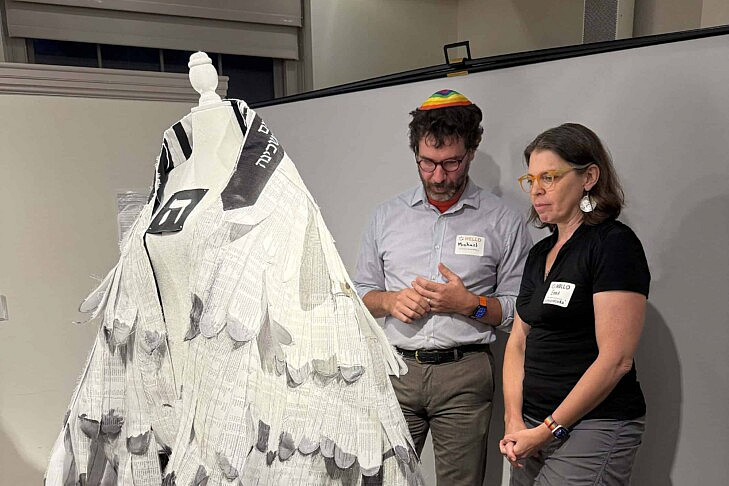
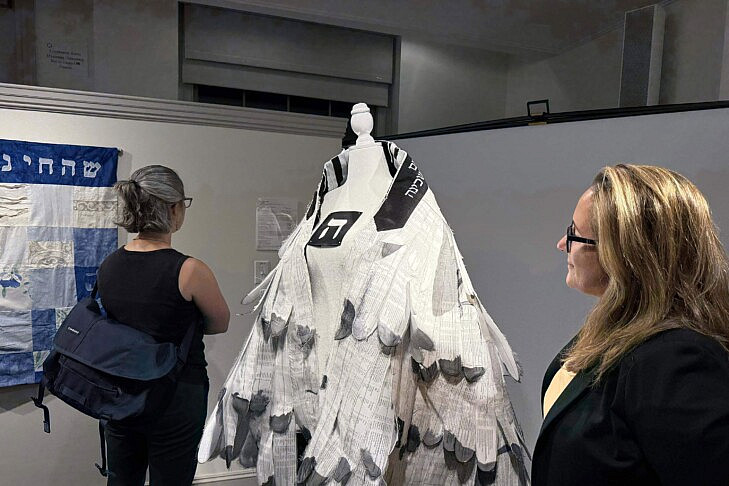
The tallit is intentionally text-rich. Alongside the 1,274 names inscribed across the feathers, the attarah (neckband) bears the opening line of the El Malei Rachamim prayer: “God, full of mercy, who dwells in the heavens, grant perfect rest under the wings of the Shechinah.” Beneath it is the second paragraph of the prayer, asking for peace for the souls of the dead.
Each of the four corners displays one of the traditional letters found on Jewish headstones, תנצבה (“May their souls be bound in the bond of life”). The final letter, hei, symbolizes the feminine aspect of God—a mystical allusion to the Shechinah herself. At the base of each feather are fragments from the Yizkor prayer, the El Malei prayer, and Yehuda Amichai’s modern poem also titled “El Malei Rachamim.”
I created this tallit from my own personal experience, but I want to acknowledge that nearly everyone around me grieves in their own way, and that I believe Oct. 7 changed us all in one way or another.
In the first year (and still now, to some extent), the grief was overwhelming, waiting just around the corner whenever I wasn’t working or focused on something else. It was strange to be an Israeli living in the U.S.—my heart was in Israel, where the trauma was still unfolding, while around me life went on as if nothing had happened. Grief had a real presence in my life but no form. The Shechina tallit gave shape to that inner pain.
Creating it was both painful and meditative. Over many months, the work shifted from raw grief to a sense of mission. The most difficult moments were translating the names and circumstances of death into English. Looking up names in Thai, Cambodian, and Arabic drew me into each person’s life story, making the harshness of their loss even more real.
One of the most emotional moments came at the very end. After installing the tallit at The Vilna, I cut off one of the front tzitziot. When a person is buried in a tallit, it is customary to cut a corner fringe to render it no longer fit for prayer, since the tzitziot symbolize the observance of mitzvot, and the dead can no longer fulfill them. I could have simply left one fringe untied, but cutting it off felt deeply meaningful—a gesture of grief, and also a small step toward acceptance.
The Shechinah is on display at The Vilna through Oct. 10, 2025, with open gallery hours on Oct. 9 in commemoration of Oct. 7. We hope you’ll join us to experience this piece in person.
This post has been contributed by a third party. The opinions, facts and any media content are presented solely by the author, and JewishBoston assumes no responsibility for them. Want to add your voice to the conversation? Publish your own post here. MORE