





In September, I hosted a trivia night called “It’s a Gen X Party.”
The questions weren’t that hard. MTV, Nirvana, sitcoms, “Titanic,” Tylenol, and, of course, “Who Shot J.R.?” I think I had as much fun writing the quiz as people had taking it.
The room was mostly people my age, or a little older… in other words, people who knew exactly what world the questions were pointing back to before I explained a thing. Except, of course, for the parents with younger kids, who didn’t quite get it (but I think they had a good time, too).
The answers came fast. People weren’t just thinking, they were audaciously remembering. It was nostalgic, but it wasn’t just nostalgia; it felt closer to therapy, like the world had finally noticed we were all still here.
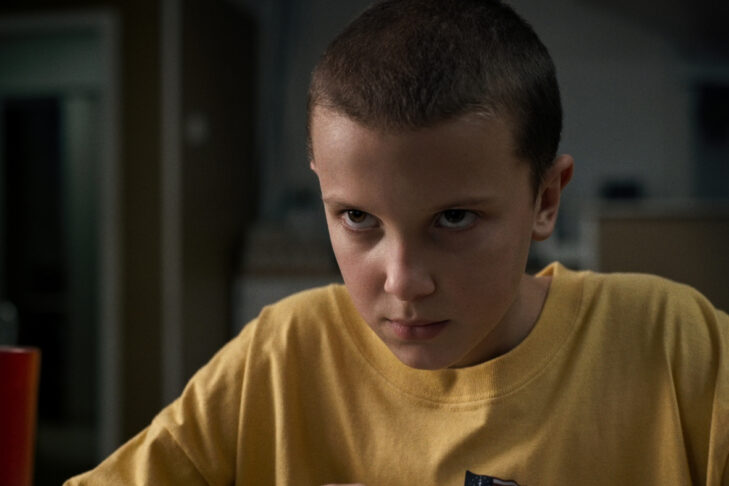
I think we all try to preserve these tenuous connections to our childhoods; we sort of remember how things were, but the details are murky. Which is why pop culture’s most unifying moment in recent memory—the “Stranger Things” finale (and really, the whole show)—felt… golden. I cried a little. And based on what I saw on Threads, I wasn’t alone.
What sent me over the edge? (Spoiler alert.)
It was when Hopper proposed to Joyce.
I’m not even sure why; we all saw it coming. Of course they were going to end up together—they’d earned their happy ending as much as the kids had.
And yet there I was, misty-eyed (not hardened, seasoned, and emotionally calloused in the way Gen X prides itself on being), watching two battered, middle-aged people finally choose each other. The payoff was profound. They looked at each other and realized they had survived the same trauma, it was time to stop pretending it didn’t matter, and they had better hurry up and finish their lives together.
I wasn’t emotional just because I was happy for Hopper and Joyce. I was emotional about the work it took to get there. And that’s what makes us Gen Xers ripe for this kind of stuff—we grew up actually looking at people as they were, not as their digital selves. I’d argue that made us a little more emotionally fluent than we tend to let on.
Gen X has always lived in the middle. Too young to be Boomers, too old to be millennials. We were raised by cheap gas and the Cold War, by seatbelt wars and MTV, by AIDS and the Challenger explosion, by Chernobyl and U2 and Billy Joel, by the last truly analog college experience, and by songs that assumed the world might end at any second. We were raised more by culture than by institutions and had a constant low-grade sense that adults didn’t really know what they were doing. And now that we are adults, well, we were right. But what does it even mean that we were right in the ’80s and ’90s? Not much.
Really, time waits for no Gen Xer. Metallica and Nirvana are classic rock now, MTV is effectively gone, and “Star Wars” is almost 50. I’ve watched my music move from tapes to CDs to MP3s to iPods to Spotify in what feels like the blink of an eye, but has actually been nearly four decades. For lack of a better descriptor, I have become Tommy Lee Jones in “Men in Black,” forced to go buy “The White Album” again.
Some things don’t age. We do.
All of this isn’t just nostalgia. It’s the work of holding onto a world that was, preserving its details so it can still be recognized later. And that’s what Gen X has been doing all along, remembering what mattered, even when no one else seemed to notice and when there was no digital archive to back us up. We remembered because if we didn’t, it was gone. In many ways, it’s a little like the Upside Down, a world frozen, perfectly preserved, and stuck in the moment everything started to go wrong.
And if we’re honest, that’s also how a lot of Gen X memory works. The ’80s and ’90s live in our heads exactly as they were: MTV always on, the mall still open, the song never-ending. To sort-of quote a ’90s banger, we don’t have to go home, but we can’t stay there.
And, yes, that’s how a lot of Jewish memory works as well.
Judaism has never treated memory as optional. It doesn’t rely on nostalgia or sentiment; it builds remembrance into daily life because survival depends on it. We remember not because it feels good, but because we have to. Gen X, unintentionally, learned the same skill.
Did Judaism crawl so that Gen X could walk? Not really… but it’s fun to think that way.
We absorbed culture before it was curated and preserved it before it was searchable. Go upstairs and I’m sure you’ll find the same scattered photo albums we all seem to have lying around, physical proof that remembering took work. We didn’t carry external hard drives in our pockets or outsource memory to the cloud; if we wanted to keep something, we had to keep it ourselves.
“Stranger Things” understands this heritage. The bikes, the vibes, the music (please never forget the “Separate Ways” moment in Season 4), and all those childhood Passover eggs only we noticed were one layer. Yet underneath the eye (and ear) candy was another story: grief, fear, loyalty, and kids forced to save the world because the world was fundamentally broken. Didn’t you and I grow up feeling that way?
The ending was both satisfying and tragic. We got to see the characters close their Hawkins era and ride off together, knowing full well that the promises they made wouldn’t last; their innocence wasn’t lost yet, but we all knew it was about to be. It mirrors the morning after my high school graduation, as dawn broke in an IHOP parking lot and I was full of warmth and certainty about the rest of my life. I didn’t know then that I would never feel that way again.
Once, we were all on that rooftop (or that parking lot) making plans, sharing dreams, and dreaming of what we might become. And I’m equally certain that over time, we’ve also all closed chapters and moved on from that specific moment of youthful naïveté.
Yet we also still hold on to it—and it comes up every so often. A song you’ve bought four times already comes on, and for a moment you remember exactly who you were the first time you heard it. A promise you made at 18 still hums faintly in the background, even though life happened and you never paid up. A look passes between two people who’ve been through the same crap, and no one has to explain it.
That’s what Hopper and Joyce recognize. Theirs was not a tidy ending—it was just the quiet triumph of shared history, of remembering things the same way, and knowing someone else saw it, too.
Likewise, Judaism never promises (and rarely gives) happy endings. It does, however, give us memory. Again and again, it insists that survival isn’t about resolution, it’s about refusal. Refusing to let stories disappear. Refusing to pretend the past didn’t cost something. Refusing to believe that what mattered only mattered if it was easy.
Gen X learned the same lesson without realizing it. We stayed with things until the bitter end, not for closure or perfection, but to carry them forward;
And not to finish the story, but to make sure it wasn’t forgotten.
This post has been contributed by a third party. The opinions, facts and any media content are presented solely by the author, and JewishBoston assumes no responsibility for them. Want to add your voice to the conversation? Publish your own post here. MORE