





On Wednesday night, the news broke.
After two long years, the war will come to an end. The hostages will be returned. There are no words to describe the depths of emotion that I, that we, are feeling. The nightmare is almost over.
Shehechiyanu, v’kiyimanu, v’higiyanu lazman hazeh.
In the spirit of there being no such thing as coincidence, on the other end of this holiday weekend, we will celebrate Simchat Torah, a holiday that serves both as an ending and a beginning. The Torah concludes with Moses standing on Mount Nebo, looking into the Promised Land, and dying al pi Adonai, literally, “by the mouth of God.” God takes Moses’ final breath, and he is buried on the plains of Moab.
But we do not dwell on that tragedy for long. We immediately begin the Torah again, returning to the opening lines of Genesis, where God breathes life into Adam. The text moves seamlessly from death to creation, from the stillness of an ending to the pulse of new life. That is not just literary symmetry; it is a theology of resilience. In that divine exchange of breath, one taken, one given, lies the secret of re-creation. Our eternal story reminds us that even when breath stops, it will one day return, and that endings contain the seeds of creation.
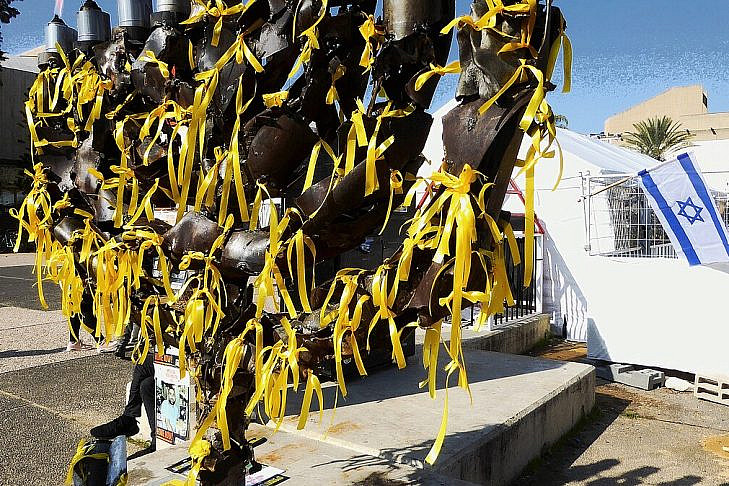
As we pray and prepare for the imminent end of the war and the return of the hostages, this could not feel more relevant. The end is impossibly close, and we are suspended between breaths. The names of the captives, two years in, are seared into our consciousness. I can’t imagine the dismantling of Hostage Square, the removal of the posters from public places and ambulances, or the end of empty chairs at celebrations. I can’t envision a gradual return to normal for society at large, a society that has been living in a state of war under attack from all directions for the better part of two years. I cannot picture what this new phase of recovery will look like for a nation that has been deeply traumatized.
With news of the deal emerging, the contours of this ending are becoming clearer. In a stunning development, all of the hostages, dead and alive, will be home, perhaps as early as Monday. Soon, we will be able to breathe again. Nothing will undo the loss, but this will close a chapter after two years of suffering.
The Torah teaches us that holiness resides not only in the beginning, but also in the act of beginning again. When we finish V’Zot HaBerachah and immediately turn back to Bereishit, we remember that despair never has the final word.
So, too, for us today. Bringing the hostages home, the living and the dead, will be both an ending and a beginning. It will mark a sacred moment of re-creation: the restoration of dignity, the beginning of the mending of our still-broken hearts, and the chance to breathe again after an era defined by suffocation and fear.
Simchat Torah calls us to dance with both sides of the scroll in our arms. The end and the beginning are held together at once, Moses’ final breath intertwined with Adam’s first. This year, that dance is a supplication, a plea that we may once again become a people capable of creation after devastation, of life after loss.
We have no other choice. We never have.
When the final hostage returns and the war’s last breath is spent, we will begin to breathe again. And may that breath be the start of our collective Bereishit, our next act of re-creation.
This post has been contributed by a third party. The opinions, facts and any media content are presented solely by the author, and JewishBoston assumes no responsibility for them. Want to add your voice to the conversation? Publish your own post here. MORE