





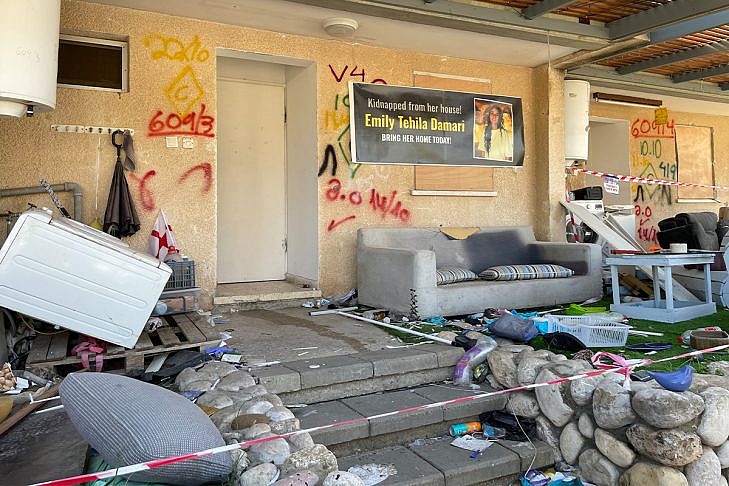
I have carried Oct. 7 in my body in ways I did not expect. I came to Israel two years after the attack after being invited by the Consulate General of Israel to New England to join a group of Black and Brown Boston leaders as observers in the aftermath of the horrific Oct. 7, 2023, attack. I came as an African American, as a therapist, and as a human being trying to understand a grief that words alone could not hold. I thought I was prepared to listen. I thought I understood trauma. But standing there, in the places where extended families, and young people enjoying a brief moment of music, friendship and community had been hunted, murdered, taken, and forever changed, I found myself undone.
I cried most of that week. The tears came before I could organize them or explain them. They came when I stood in the kibbutz where Hamas entered Israel and felt the unbearable closeness of terror to home, family, and everyday life. I kept thinking about how quickly a morning can become something no family should ever have to remember. They came when I saw the torched, burned-out cars stacked on top of each other and knew that young lives had been inside them.
As a therapist, I have sat beside American urban pain many times, but this pain felt different because it was still so present. It was in the silence between sentences. It was in the faces of family members who were grieving, waiting, remembering, not knowing if another attack was imminent, and somehow still breathing. To be present with them was to be invited into a sacred space of shared grief. I did not leave that grief behind when I left Israel. An ache remains in my chest even now.
My African American history came with me into that witness. I come from a people who know what it means for trauma to be carried across generations, for suffering to be minimized, and for memory to become both a wound and a testimony. That history made me more tender toward Jewish grief, not less. It also reminded me that grief must never make us indifferent to the suffering of others. I can condemn the barbaric brutality of Hamas with moral clarity, mourn deeply Israeli families whose lives were shattered, and still hold tender compassion for Palestinian civilians whose own lives have been devastated by war.
What I witnessed was trauma that will remain for years to come. It will remain in families, in communities, in nervous systems, in holidays, in empty chairs, in photographs, in stories told again and again because the heart is still trying to understand and survive what happened. I do not want to rush past that pain. I want to stay close enough to honor it.
On this anniversary, I am not remembering Israel as simply a sight-seeing trip. I am remembering people. I am remembering the young lives in those cars, I am holding space in my heart for the sweet families I met, the places where terror entered, and the grief that still breathes in those who remain. From the generational horror of living as a Black man in America, I unequivocally believe that remembrance must be an act of tenderness, responsibility and courage: to tell the truth, to protect life, to resist dehumanization, and to let shared grief deepen rather than diminish our humanity.
This post has been contributed by a third party. The opinions, facts and any media content are presented solely by the author, and JewishBoston assumes no responsibility for them. Want to add your voice to the conversation? Publish your own post here. MORE