




Over the last few years, it’s been frustrating to see Harvard University frequently associated with antisemitism in the news. While some of the criticism has been extreme, President Alan Garber has publicly acknowledged the issue, and it was inspiring to hear him speak on the Shalom Hartman Institute’s “Identity/Crisis” podcast at The Vilna about prioritizing the work of making campus feel safe for Jewish students. (Listen to the episode here.)
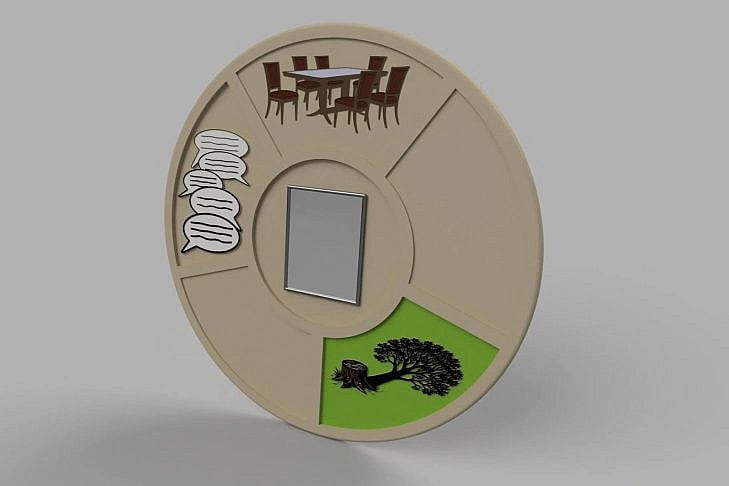
In response to this uncomfortable climate for Jewish students, Harvard Hillel has a plan to bring a bit of Jewish joy and learning to the campus just in time for Passover 2026. A larger-than-life upright seder plate will bring the universal storytelling and heart of Jewish life and values to students, faculty, and visitors across the campus.
It was Harvard Hillel Senior Director of Community Engagement Elisha Gechter who came to me months ago, frustrated by the fear and lack of recourse Jewish Harvard students were coming to her feeling. Elisha and her colleagues wanted to help bring Jewish pride and joy to campus, and to use art as the powerful medium we all know it is to help in these hard moments.
After many conversations and iterations, the idea emerged to create this public art sculpture with local woodworker Michael Mittelman. Like the Passover story, this piece is a multilayered story, so I asked Elisha to share four of the key elements that came together to tell this seder tale.
In the seder, yachatz is the moment we break the middle matzah. Just as we break the matzah, Michael Mittelman breaks and carves wood to tell a story. How does this show up in this larger-than-life seder plate sculpture?
Michael is adept at giving physical form to complex ideas, using all kinds of wood to create beautiful and complex pieces. When I approached him about a project that would get at Jewish identity on campus, he was excited to partner with students and faculty to hear their stories and figure out how to translate it into a large format for our campus that will draw people into a conversation. He’s exhibited his work at the gallery at Mayyim Hayyim, but this will be his first Jewish-themed public art.
Magid is the moment in the seder we retell the Exodus story. How will this art piece help tell this story? What is the meaning behind each piece on this special seder table?
The interpretive seder plate will stand upright, rising visibly in a public plaza between Harvard Yard and the Science Center, transforming a high-traffic campus crossroads into a visibly Jewish, welcoming space. The round seder plate sculpture will be filled with objects that help tell the story of Passover, and encourage passersby to explore the story through viewing and reading about the work.
This space itself tells a story because it has been one over the past few years in which students have felt alienated by anti-Jewish rhetoric and symbols. Each element on the seder plate represents dimensions of Jewish identity that our constituents hold and that give language and visuals to the story of these students feeling persecuted, and ideally feeling freedom by sharing their traditions with their fellow students.
Shulchan orech is the Passover festive meal. Like this meal, what does it look like when this piece is activated? When should we be there?
The piece comes alive during the three-day festival leading up to Passover, from March 23–26. The piece becomes both symbol and stage, filled with music, workshops, talks, and shared food. What is normally a busy campus thoroughfare becomes an active site of Jewish encounter. Students, faculty, alumni, and visitors gather for performances, matzah-making workshops, charoset tastings, artist conversations, and facilitated dialogue. Some will stop for five minutes; others will stay for an hour.
Hallel is the end of the seder when we give praise for the Exodus and for protecting us. How do you and the students hope this piece will make a difference on campus and create a sense of safety?
The installation is activated through participation: singing, learning, and eating together. We hope this project offers positive awareness of Jewish tradition and helps shift the atmosphere, a joyful, pluralistic center of gravity in a space where some students have felt alienated by anti-Jewish rhetoric. For Jewish students, we hope it builds pride and belonging. For the broader campus, we hope it models how art, learning, and conversation can transform polarization into engagement.
“The People’s Plate” will be on display at Science Center Plaza on the Harvard University campus from March 23-26. Come see it. Come talk about it. Come be part of it.
Related
- Mar 23, 6:00 pm
 Mar 24, 10:00 am
Mar 24, 6:00 pm
Mar 25, 12:00 pm
Mar 26, 10:00 am
Mar 24, 10:00 am
Mar 24, 6:00 pm
Mar 25, 12:00 pm
Mar 26, 10:00 am
This post has been contributed by a third party. The opinions, facts and any media content are presented solely by the author, and JewishBoston assumes no responsibility for them. Want to add your voice to the conversation? Publish your own post here. MORE
Filed Under: Laura Conrad Mandel is a curator and entrepreneur. She grew up at Schechter Boston, graduated Carnegie Mellon University with a degree in art and English, and began her nonprofit career at Hillel. Laura served as executive director of the Jewish Arts Collaborative from 2014-2025, and following a merger with the Vilna Shul, Boston’s Center for Jewish Culture, she now serves as managing director of program strategy and impact.