





On Tuesday, Dec. 16, the “Heschel and Jewish Peoplehood” conference was held in Jerusalem, led by the World Zionist Organization. The conference took place two years after the Oct. 7 massacre—an event that continues to shake the Jewish people as a whole—and sought to engage with questions of Judaism and Zionism, responsibility and commitment, love of the Jewish people and love of humanity. At its heart stood the question of Jewish peoplehood: that deep sense of belonging that transforms a collection of individuals into a people; a solidarity grounded in a shared destiny, collective memory, and mutual responsibility.
The conference opened with remarks by Yaakov Hagoel, chair of the World Zionist Organization, who welcomed participants and offered a clear and compelling framework for understanding Jewish peoplehood in our time. In his words, peoplehood without Zionism is a connection without direction, while Zionism without peoplehood is power without a family. We need both—but in the right order: sovereignty as the foundation of responsibility, and peoplehood as a space for partnership, strengthening, and expanding circles of belonging.
Yizhar Hess, acting chair and vice chair of the executive, continued this line of thought, emphasizing that Israel’s success has turned the state into a central educational tool in shaping Jewish identity. From this success also stems a danger: any negative shift in Israel’s conduct may have the opposite effect, eroding the Jewish identity of Jews in the Diaspora. The responsibility assumed by Israeli governments in leading the nation-state of the Jewish people could—if it operates in contradiction to Herzl’s vision and the values of Israel’s Declaration of Independence—become a weakening and oppressive force. When the State of Israel acts in ways that are immoral or unjustified, he warned, it risks alienating Jews around the world not only from Israel, but from their Jewish identity as well.
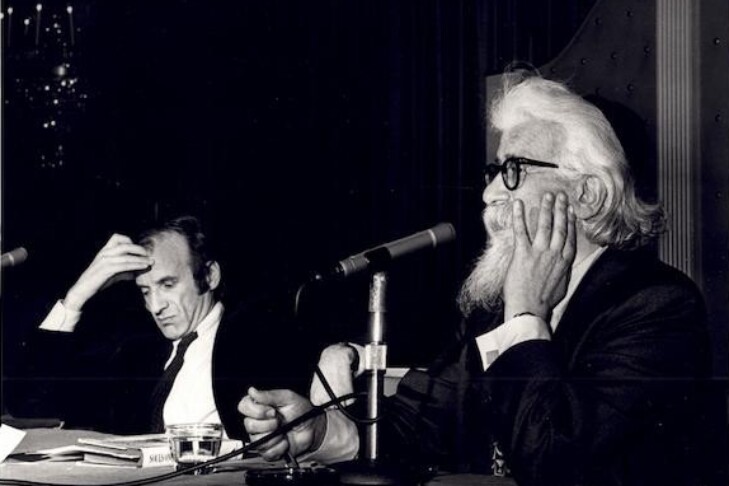
Following the opening plenary, I chose to participate in a breakout session titled: “Two Modern Prophets—Abraham Joshua Heschel and Elie Wiesel Facing the Challenges of the Jewish People.” This topic felt no less relevant today than it was in the aftermath of World War II—the period in which both leaders lived and acted. At the center of the panel stood the question: What can we learn from these two modern prophets who operated during a moment of profound rupture in Jewish society?
As the panelists—scholars of philosophy and academia—were introduced, I found myself shifting uncomfortably in my seat. I wondered whether this was the right moment for a theoretical discussion, while the trauma is still alive within us, thousands of soldiers are wounded in body and soul, and not all of the hostages had yet returned home.
It was precisely at this moment that the words of professor Hanoch Ben-Pazi of Bar-Ilan University offered a calming and profound sense of direction. He emphasized that both Heschel and Wiesel chose to see rupture as an opportunity not to be missed—a call for change, and a call directed outward. Both understood that for the particular story of the Jewish people to hold meaning, it must also be heard in the universal arena. Elie Wiesel spoke first and foremost to the Jewish world, while Abraham Joshua Heschel addressed the non-Jewish world; yet both devoted their lives to the struggle for human rights, moral justice, and universal responsibility.
Rabbi Shoshana Cohen of the Shalom Hartman Institute added another meaningful layer to the discussion, highlighting the ability of both leaders to rise from trauma to a place of deep empathy for the suffering of others. Their personal pain did not lead them toward revenge, but rather toward the capacity to see the other, understand them, and act with compassion.
What does Jewish peoplehood mean to me, and what change do I believe is needed?
As a secular Israeli, an educator who has worked within the education systems in Israel and the United States, and currently Jewish peoplehood coordinator at CJP’s Haifa-Boston Connection, I often observe a lack of familiarity among young Israeli generations with the concept of Jewish peoplehood. While the common understanding of the term, within Israel and the Diaspora, tends to evoke traditional and religious associations, it often overlooks exposure to the local secular community and to a diverse civil society across all its sectors—expressed through social involvement and initiatives, influential figures, and community leadership.
Peoplehood does not begin with grand declarations, but rather with genuine human encounters that generate authentic experiences and social engagement. Social action, as well as conceptual and planning involvement in joint projects, allows individuals to encounter those who are different from them—people with other cultures and languages—and to come together around a neutral, shared foundation.
For more than three decades, CJP’s Haifa–Boston Connection has led educational programs focused on Jewish peoplehood, through which school students meet peers across the ocean, either virtually or through delegations. In addition, we lead programs that connect Bostonian volunteers with Israeli school students to strengthen English conversational skills. Both programs bring communities together and reinforce a sense of belonging to them.
We must infuse the concept of Jewish peoplehood with more relevant and authentic content that enables younger generations to reconnect with it. This can be achieved through shared educational programs embedded in day school curriculum, and activities that increase involvement with Israeli society. Above all, people to people encounters give individuals the sense of belonging to a shared community.