





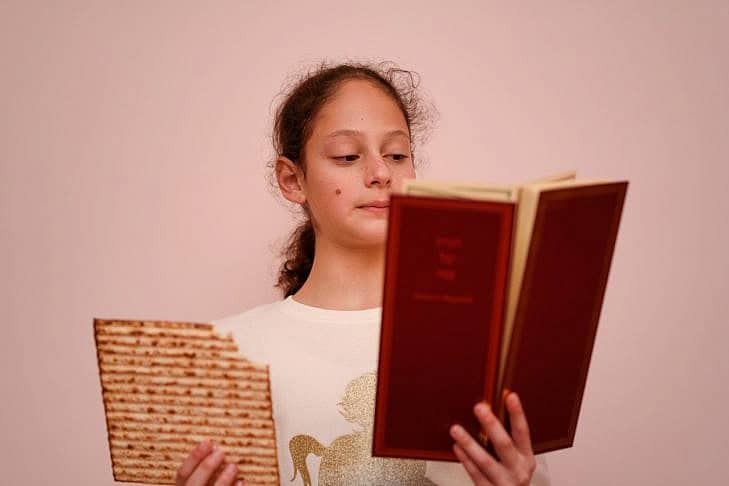
Passover is nearly here. In years past, we’ve gone to a friend’s parents’ house. Now that those friends have kids, though, traditions have changed and their table is full. I think we’re on our own this year. But one thing will never change, of course: The Four Questions (Ma Nishtana): Why is this night different from all other nights?
Why do we eat only matzah tonight, while on all other nights we eat both leavened and unleavened bread?
Why do we eat only bitter herbs tonight, while on all other nights we eat many different vegetables?
Why do we dip our food twice tonight (usually karpas into salt water and maror into charoset), while on all other nights we don’t dip even once?
Why do we eat in a reclining position tonight, while on all other nights we eat sitting upright?
In recent years, many people have added a fifth question centered around politics or current events. Partially, it’s a way to engage squirmy kids. It’s also a way to add a dimension of urgency to the ritual: Struggle still exists, and we can still persevere. It’s also a way to get people talking—really talking—about their hopes and worries on a holiday that commemorates freedom and redemption. During Passover, eating together is about far more than food. It’s an opportunity for reflection and discussion.
And yet.
I think a lot about how struggle is so abstract for my kids, and Passover underscores their insularity. I’m thankful that they’ve never known suffering of any kind (unless you count homework as suffering). But it also means that freedom and redemption are distant concepts. Now, this is true for many of us; few of us can truly relate to an exodus from slavery. But too many of us know discrimination, hunger, financial instability or violence. And others are oppressed in subtler but significant ways: tethered to technology or the news; afraid to show our true identities; living in quiet fear in a turbulent political climate.
My kids know none of this, but they do have their own challenges—everything is relative—and I respect that. So I’d like to prompt them with meaningful questions that resonate in their daily lives, a departure from our usual dinner table discussion that involves what time practice starts and whether that F in PowerSchool is going to be updated soon. Some ideas:
- What does it mean to you to be free?
- How can we help people who are oppressed, who don’t feel that sense of freedom?
- What hardship have you overcome, and what advice would you give to someone else experiencing the same thing?
- Is there anything in your life—a way of thinking, a habit, a burden—that you’d like to break free from?
- How do you show empathy in your everyday life?
- What gives you hope for the future?
- And a fun one: What seder food represents your personality? (I’m gefilte fish: a niche taste with loyal fans.)
Ritual matters, but so does resonance. I’d love to hear your ideas for more questions. And, if you’re still in need of Passover meal ideas, check out these handy pickup or delivery options.