





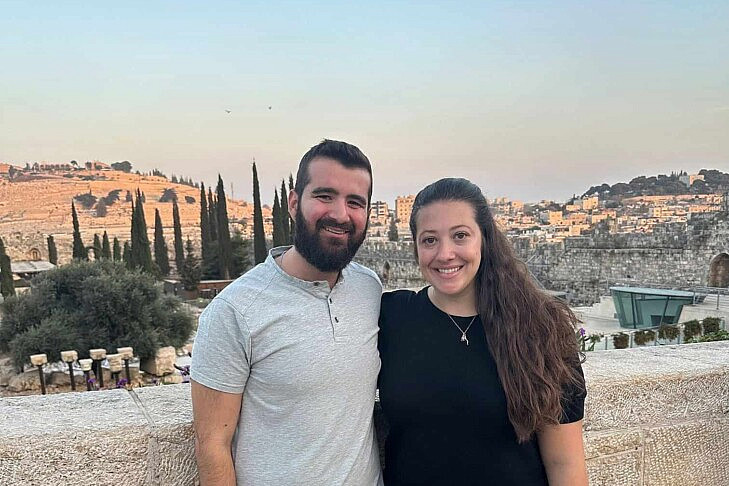
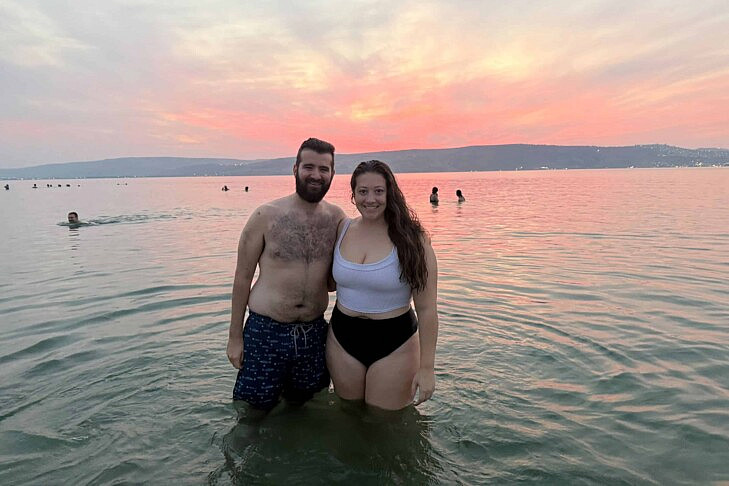
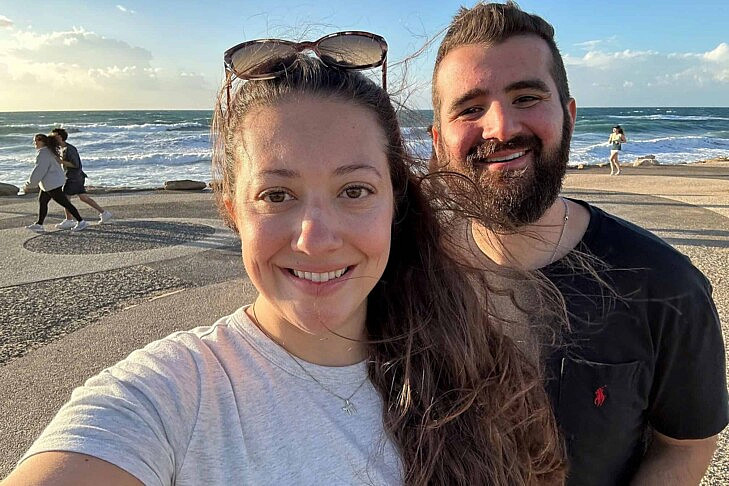
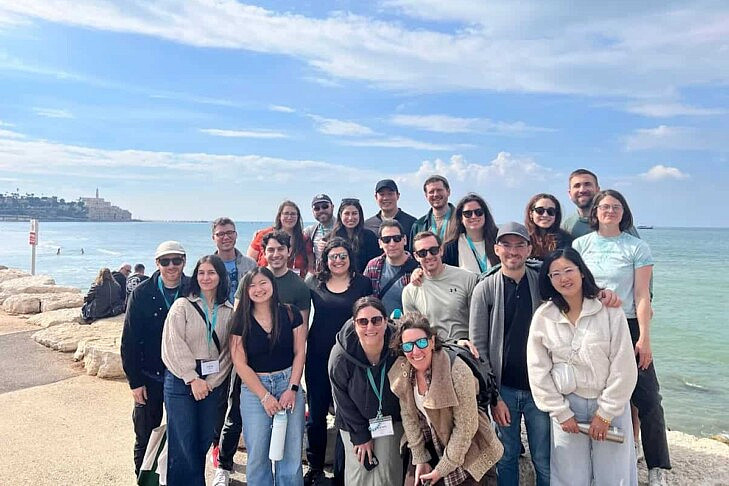
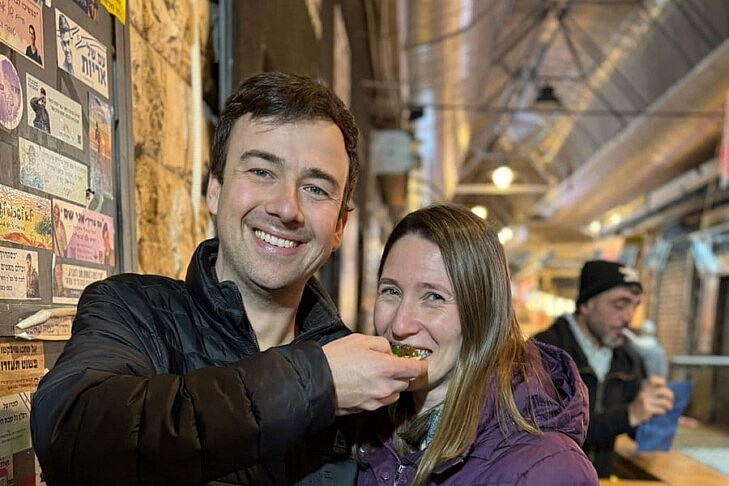
As the sun set over the Sea of Galilee, a group of Boston couples waded into the water clutching cold beers.
They had met only days earlier. But after hiking Masada, exploring Jerusalem’s Old City and sharing long conversations about faith, family and identity, onetime strangers already felt like friends.
“We all went to the little market where we were staying, picked up six-packs of beer and stood in the water watching the sunset,” Watertown’s Ava recalls. “Everyone was just talking and laughing about the trip and what was coming up. It was surreal, being in Israel, making all these great friends I feel so close to.”
The scene captures the goal of Honeymoon Israel, a national program that brings young couples — many of them interfaith — to Israel to explore Jewish life and build community back home.
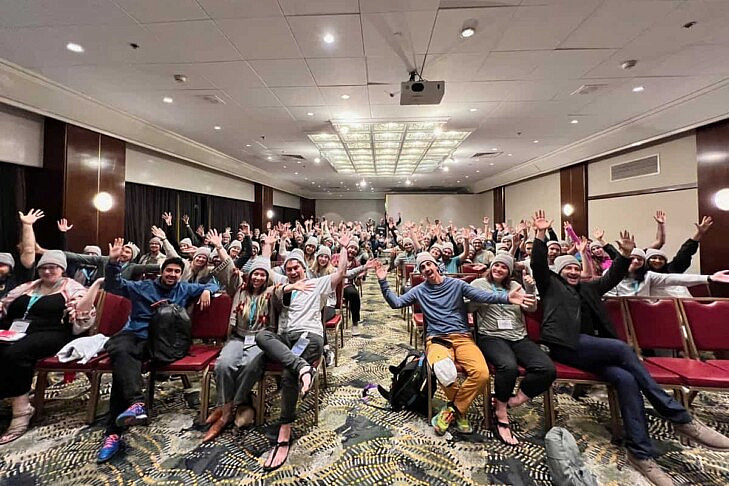
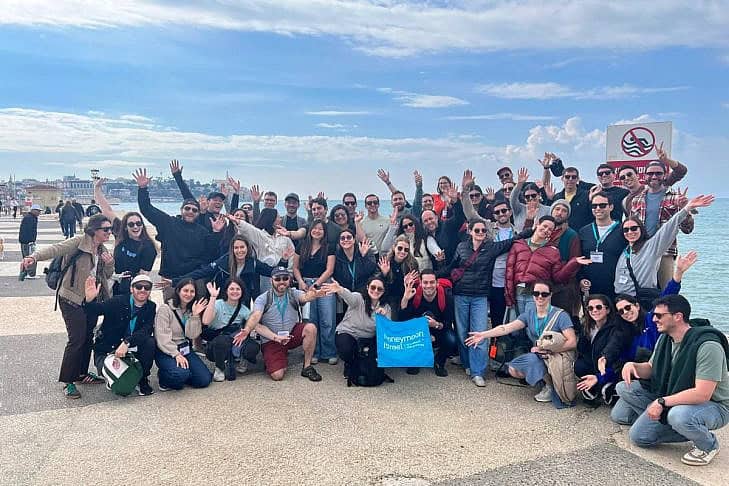
The organization, which launched its first trips in 2015, sends cohorts of 20 couples from the same city on a nine-day trip, funded in part by CJP. Applications for upcoming Boston trips recently reopened to couples ages 25 to 40 who have been together five years or less.
CEO and co-founder Avi Rubel says the idea sprang from a shift in how the Jewish community thinks about interfaith families.
“In the past, many people looked at interfaith couples as a minus,” he said. “We said, what if they’re actually a plus two?”
The program invites couples to explore what Jewish life might look like for them, on their own terms. At least one partner must be Jewish.
“We try to select couples whom we think need this the most: In other words, couples who haven’t already found a home or affiliation in the Jewish community, couples who aren’t sure how and if they want to build Jewish families,” Rubel explains.
Ava and her husband, Perry, joined the program shortly after getting married in December 2024.
They met on Hinge in September 2020, during the early months of the pandemic.
“We spent a lot of time just sitting on each other’s couches, playing games, talking,” Ava said. “We weren’t really meeting each other’s friends yet or going out much. It was a lot of just us.”
In a way, she said, they experienced the quieter rhythms of married life before the more social parts of dating.
“We kind of did the boring marriage part before we got to really date out in the world,” Ava joked.
Their first “real” date was at Earl’s in the Back Bay, for truffle fries and $5 Moscow mules.
After their wedding at the Park Plaza in Boston, the couple eventually settled in Watertown. They had already taken a traditional honeymoon in the Caribbean, but Honeymoon Israel offered something different: a chance to travel together while connecting with other couples navigating similar questions.
Related
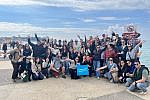

“I felt like my entire frame of reference for Judaism really was Perry and his family. Being able to talk to other couples and see how they do things, where they fall on the spectrum of Judaism, what conversations they’re having, was really important for me to get the full picture of what we might pick and choose to do,” Ava says.
Meeting others navigating the same conversations — about holidays, traditions and kids — was comforting. A rabbi traveled with the cohort, which also added a layer of support and wisdom.
“I think it was really helpful for me in particular because Judaism is a religion, it’s an ethnic group and there’s such a wide range of how you can be Jewish,” Ava says.
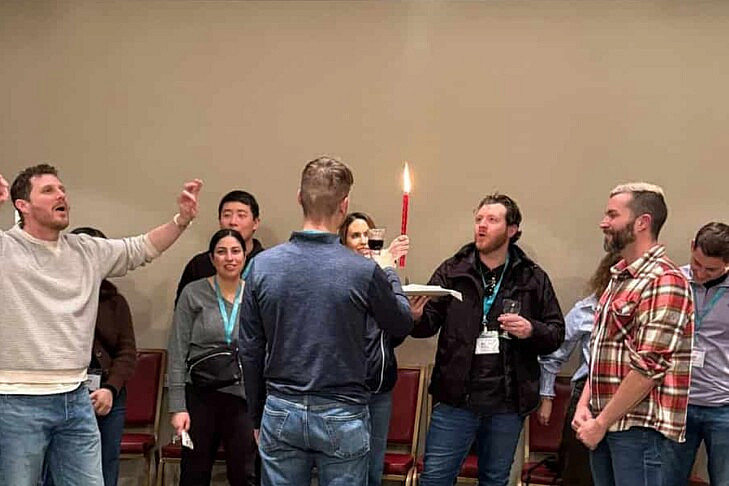
Honeymoon Israel trips blend tourism with learning and bonding.
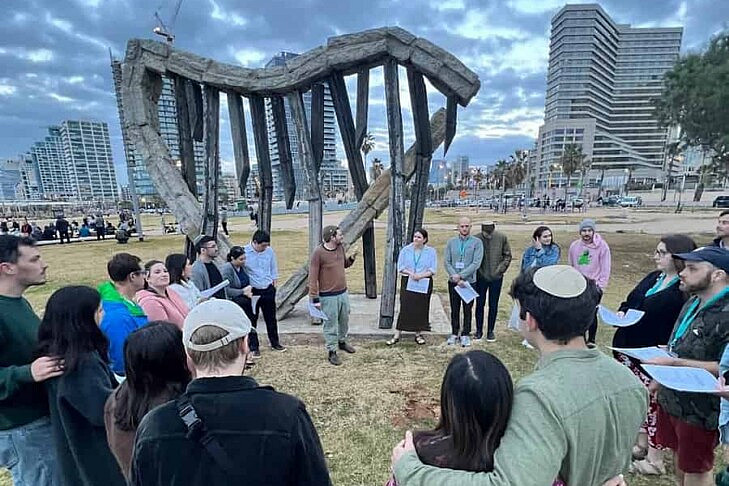
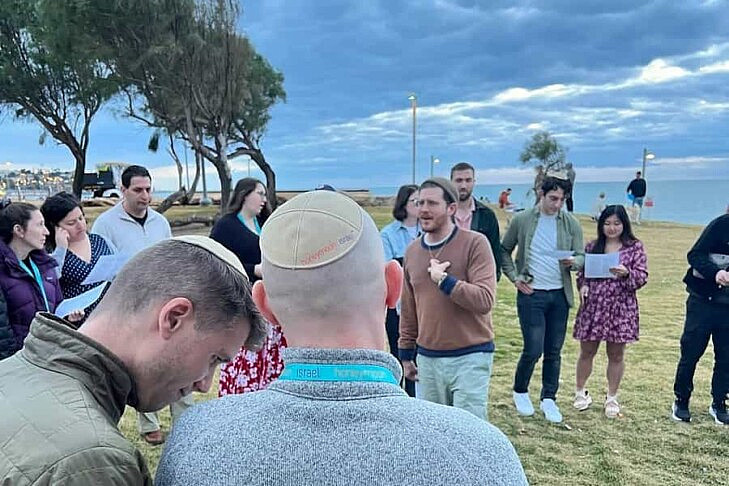
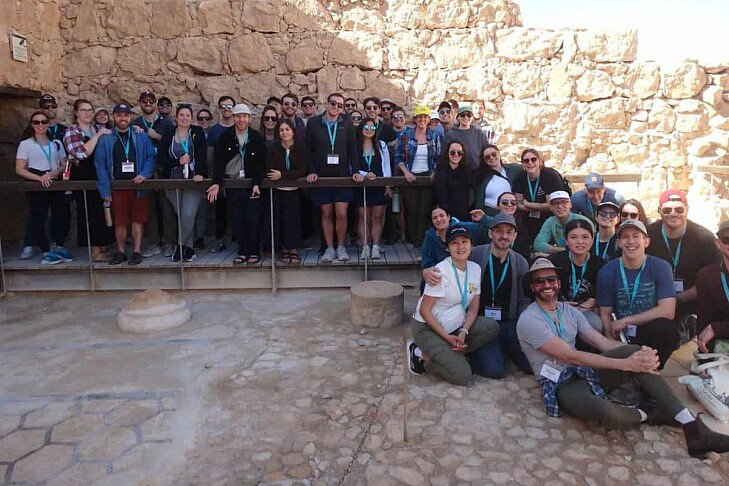
Boston couples on the recent excursion explored Jerusalem, including the Western Wall and markets in the Old City. They hiked Masada at sunrise, floated in the Dead Sea and traveled north to the Sea of Galilee before finishing the trip in Tel Aviv.
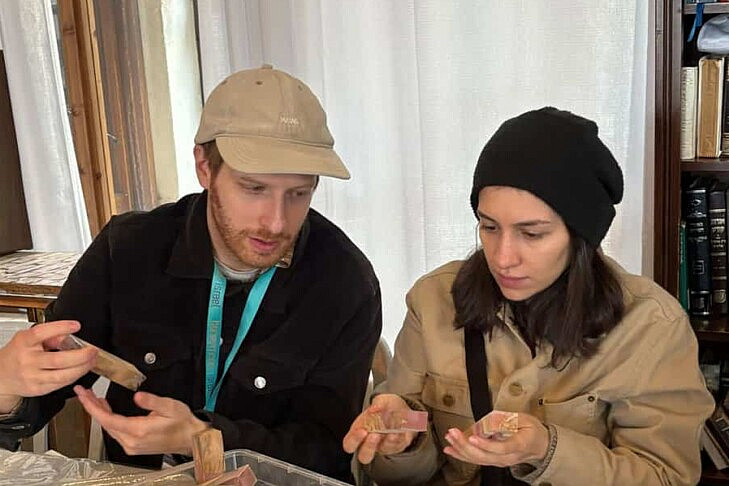
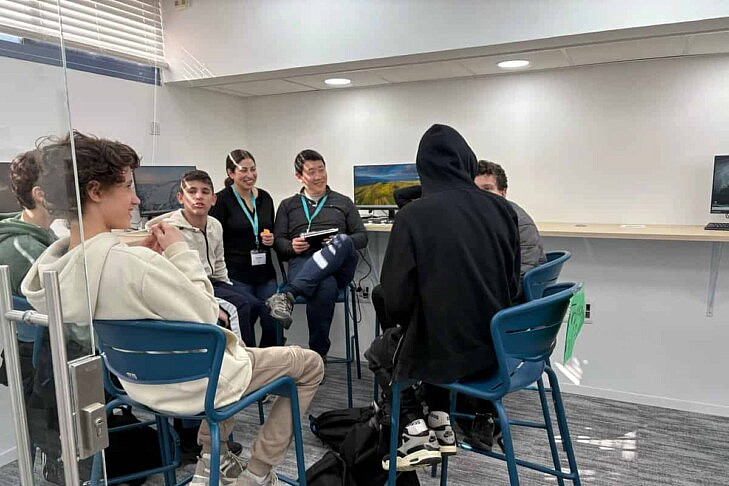
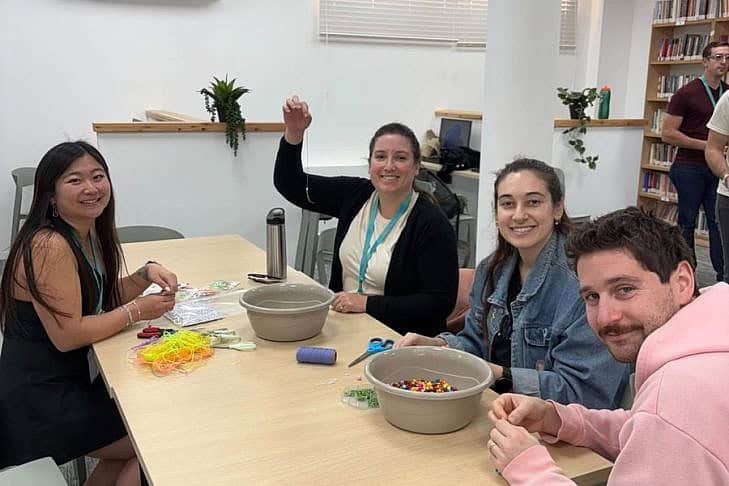
Along the way, they heard from speakers on Israeli society, geopolitics and Jewish life, participated in small-group discussions and volunteered on a community service project. Israeli couples also joined the group for several days, creating opportunities for cross-cultural conversation.
Rubel says the goal isn’t to provide simple answers, but to get couples talking about what it means to live a Jewish life.
“The trip is designed to provoke, inspire and leave people more curious, to dig deeper about Israel and Jewish life, so that when they get home, they have something they want to explore more,” Rubel says.
For Ava and Perry, those conversations are still unfolding.
“The trip helped to spark a lot of conversations that have been helpful, that we’re still having, about how we’re going to have a Jewish household and what that looks like in practice,” Perry says.
The trip also offers a more nuanced view of Israel than might appear in the news, Rubel says.
“On these trips, you can really see couples having a-ha moments: sharing a meal with an Israeli couple, talking with that Israeli couple about their lives and what they’re exploring and navigating. They often find that Israeli couples the same age as them are navigating very similar issues, maybe from a different starting point, or maybe with a little bit of a different twist. But there’s often a moment with those relationships of feeling: ‘Wow, we’re part of this global people,’” Rubel says.
The trip lasts nine days, but the program’s larger goal is sustainable community.
Before traveling, couples meet several times to get to know one another. After returning home, Honeymoon Israel offers additional gatherings and learning opportunities on topics like Shabbat, Jewish ethics and Israel.
For the Boston cohort, the friendships have already continued.
Recently, several of the women from the trip rented an Airbnb near Boston for a Galentine’s-themed sleepover. It was a comfortable reunion that felt instinctive after the intense bonding experience abroad.
“There were definitely a lot of moments at group dinners where I felt that, even though we’d only really spent a few days with these people, I could tell we were going to continue to be really good friends,” Ava says.
For Rubel, those connections are the heart of the program. The organization was founded in part in response to a widely cited 2013 Pew Research Center study showing that 72% of non-Orthodox Jews in the United States marry someone from a different background. Rather than seeing that trend as a loss, he said, Honeymoon Israel views it as an opportunity.
“We want to welcome these couples into Jewish life to give them an authentic and genuine welcome to explore Jewish life on their own terms,” Rubel says.
Learn more and apply at honeymoonisrael.org.