





Every year at Chanukah, like clockwork, we trudge back to the deep fryer.
Latkes. Sufganiyot. Oil on oil on oil. I know you can taste it… smell it… and yes, feel it. Me? I can’t help but wonder if Chanukah deserves more than the same old latke-and-sufganiyah routine.
(Mea culpa: If the heavy-oil stuff is your “yum,” apologies for “yucking it.” Truly. You do you.)
Listen, I’m not wholly anti-latke. If anything, I’m a casual fan. But maybe, just maybe, it’s time to loosen our grip on the usual Chanukah foods and consider a culinary glow-up. Let’s think outside the candle box.
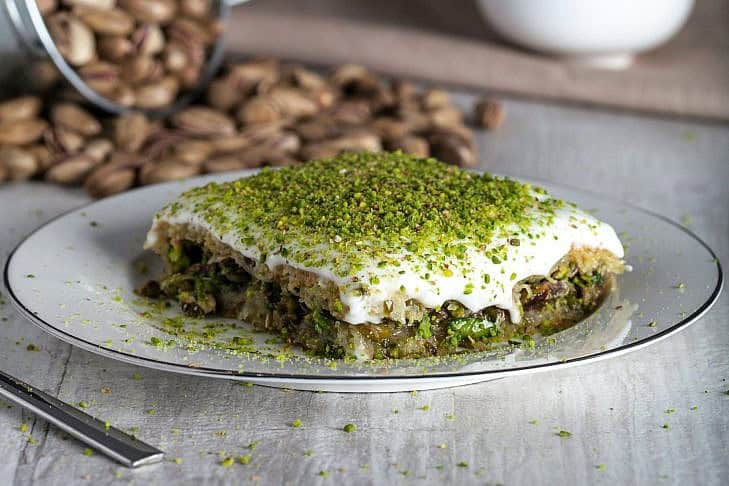
If we’re rethinking the menu, let’s embrace some overlooked Jewish and Jew-ish flavors that can help tell a story: cardamom and pistachio. Cardamom brings warmth, fragrance, and mystery; pistachios bring a crunchy, punchy, ancient Jewish flavor. The more you look for cardamom and pistachios in Jewish foodways, the more you find them—cardamom with the vibes, pistachios with the receipts.
Now, full disclosure: Cardamom is nowhere in the Jewish textual universe. Not Tanakh, not Talmud, not even the obscure midrashim that heap praise and discussion on seemingly meaningless objects. Cardamom brings something else entirely: a heat, a mystery, and an ancient Middle Eastern aroma that takes you off to distant lands.
But cardamom is absolutely rooted in Jewish cuisine. In Yemenite homes, it’s the backbone of hawaij. In Iraqi, Persian, and Bukharan Jewish kitchens, cardamom flavors coffee, teas, stews, and Shabbat breads. Syrian Jews use it in desserts, and Indian Jews fold it into sweet rice and holiday pastries. Cardamom is one of those Jewish flavors you may be missing; the farther you travel from Ashkenormie traditions, the more Jewish food it appears in. And, of course, it stars in the cardamom-and-cranberry whole-berry sauce I cook every Thanksgiving—the most Jew-ish of celebrations.
And pistachios? They have Jewish bona fides for days.
Firstly, they’re biblical; you can find them in Genesis 43:11 as part of Jacob’s diplomatic gift basket to Egypt. After that cameo, pistachios thread through centuries of Jewish cooking across the Middle East and Mediterranean: ancient Levantine sweets, Persian Jewish pastries and halva, Bukharan baklava, Syrian rice dishes that followed Jews from Aleppo to Brooklyn. Pistachios are the ancient, pan-Jewish crunch hiding in plain sight.
And today? I mean… pistachio everything is having A MOMENT—croissants, lattes, macarons, gelato, and more. As it turns out, our ancestors were (yet again) ahead of their time.
Separately, cardamom and pistachios hold different stories and different traditions. Together, they’re winter flavors through and through. Cardamom brings heat without heaviness; pistachios bring richness without oil overload. Both are elegant. Both are elevated. So here’s my pitch: Let cardamom bring the warmth, let pistachios bring the lineage, and let’s upgrade our Chanukah repertoire.
Which, honestly, is the whole point. Chanukah doesn’t have to mean the same old latke on the same old plate. It’s a holiday built on adaptation—fighting, rebuilding, improvising, and finding new ways to bring light into the season. We honor that heritage not by repeating the menu forever, but by keeping Jewish creativity alive. In this scenario, Herzl’s Altneuland (Old-New Land) meets the kitchen: a cardamom-and-pistachio Altneukuche (Old-New Cuisine) for a holiday that deserves it.
Go ahead. Crumble pistachios on your donuts, add cardamom to your latkes, shake a pistachio Old Fashioned, and mix some cardamom into your Turkish coffee. Your kitchen might end up smelling like a pop-up Judean spice market inside an artisanal coffee shop.
So, from me to you, here’s my Chanukah wish this year: May your menorah shine, and your kitchen shine a little brighter, too.
This post has been contributed by a third party. The opinions, facts and any media content are presented solely by the author, and JewishBoston assumes no responsibility for them. Want to add your voice to the conversation? Publish your own post here. MORE