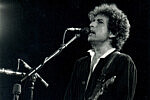





Bob Dylan has spent more than six decades refusing to be pinned down. Folk singer. Rock icon. Country crooner. Gospel preacher. Nobel laureate. Jewish kid from Hibbing, Minnesota. America’s greatest songwriter. All true—and none of them quite enough.
For Rabbi Neal Gold, that restless reinvention is part of what makes Dylan such a fascinating subject for Jewish study.
On Sunday, June 14, at 7 p.m., Rabbi Gold will lead a Walnut Street Minyan program, “Every Grain of Sand: Biblical & Kabbalistic Ideas in the Lyrics of Bob Dylan.” The evening will explore how Jewish spiritual themes surface throughout the work of Shabtai Zissel ben Avraham, better known to the world as Bob Dylan.
Gold organizes the program around four major Jewish themes: justice, mysticism, apocalypse, and redemption. Each opens a different door into Dylan’s lyrics. “The Lonesome Death of Hattie Carroll,” for example, can be heard in the moral register of the prophets, especially Amos, with its fierce indictment of injustice and corrupt power. “New Morning” carries echoes of the daily liturgy and the Jewish spiritual language of renewal. “Every Grain of Sand,” one of Dylan’s most luminous songs of faith, offers what Gold calls an almost kabbalistic vision of God’s presence in the world. “When the Ship Comes In” is a song whose imagery bursts with biblical resonance. Seas split. Sands shake. The world watches. Pharaoh’s army drowns. Goliath falls. In Gold’s study materials, Dylan’s lyrics sit alongside Jonah, Exodus, Ezekiel, Midrash Tanchuma, Talmud, and Rav Kook. The effect is something like a page of Talmud: Dylan in the center, Jewish sources gathered around him, arguing, illuminating, complicating, and deepening the song. That format reflects Gold’s real goal. This is not only a music appreciation class, though Dylan fans will have plenty to enjoy. It is Torah study by way of American song. Gold wants people who love Jewish texts to gain a deeper appreciation for Dylan, and people who love Dylan to hear the Jewish sources that helped shape his imagination. Dylan’s own Jewish story is part of the picture. Born Robert Zimmerman, he grew up in a Jewish family in Hibbing, Minnesota, became bar mitzvah, and spent summers at Herzl Camp, a Jewish Zionist camp. His later religious turns, including his famous gospel period, startled and sometimes alienated fans. But Gold sees that too as part of Dylan’s restless artistic pattern: the moment an audience thinks it has figured him out, he turns. That refusal to sit still may be exactly what makes Dylan such a compelling Jewish subject. His songs wrestle with judgment, mercy, exile, revelation, corruption, longing, and redemption. They ask ancient questions in a modern American key. And like the best Torah, they keep singing back. “Every Grain of Sand: Biblical & Kabbalistic Ideas in the Lyrics of Bob Dylan” takes place Sunday, June 14, at 7 p.m. at the Walnut Street Minyan.
This post has been contributed by a third party. The opinions, facts and any media content are presented solely by the author, and JewishBoston assumes no responsibility for them. Want to add your voice to the conversation? Publish your own post here.
MORE
Related