




Coping with childhood cancer is frightening, taxing, overwhelming. But it doesn’t have to be lonely, thanks to Camp Ramah.
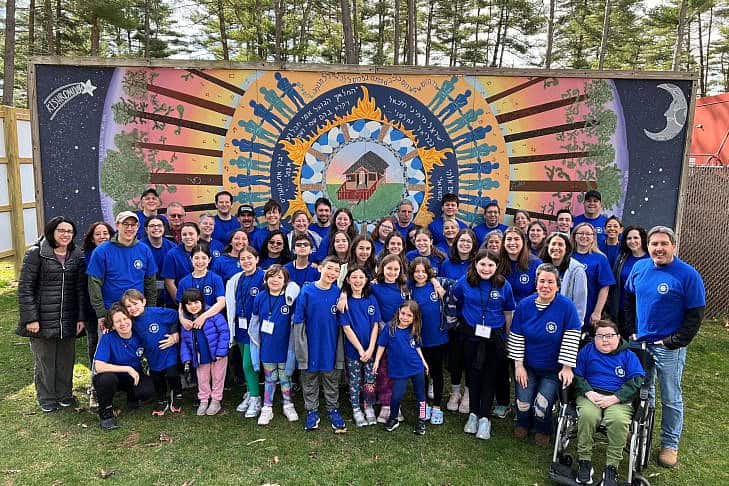
The beloved Jewish summer camp in Palmer hosts pediatric oncology family weekends throughout the year, offering families a space to decompress and connect with peers who understand. The retreats are designed for Jewish families who have kids in or who have recently finished cancer treatment, and the next one happens on April 17-19, 2026. There’s still some space available, and the program is completely free.
Ramah is known for its inclusivity and welcoming vibes, including for campers with disabilities. The pediatric retreats are an extension of that ethos.
“At Ramah, we realized that there are certain groups within the Jewish community who could sometimes be invisible to the community. One group that really stood out to us were families with cancer. We knew of several instances where families were sending their children to camp, but a sibling wasn’t coming. When we did some research, we found out it was because the child was in treatment or had just finished treatment,” explains programming director Riki Wiederhorn.

The April weekend marks the third program; an upcoming November retreat supports children who have lost a parent to cancer. Last month, a program united young professionals who’d lost a sibling or parent.
“We’ve been able to create a community where families stay in touch regularly, who know what they’ve gone through. It’s incredibly powerful,” Wiederhorn says.
For the upcoming retreat, families can expect age-appropriate programming tailored to adults and kids. For kids, there are activities like scavenger hunts, a reptile show and Build-a-Bear. (Kids tuck a Mi Shebeirach prayer for health inside their bear to take home.) Teens have a lounge and sushi- and candy-making classes; adults have nighttime events and everyone bonds over kosher meals.

Camp Rabbi Jill Levy provides Jewish programming for the weekend, designed for Jews of all kinds.
“We draw from a full spectrum of participants, from families where perhaps one parent isn’t Jewish all the way to someone who would self-define as modern Orthodox,” Wiederhorn says. “We want each person to feel seen in their space.”
The retreat is staffed by volunteer social workers, psychologists and child-life specialists. There are also trained college-age counselors, usually Ramah alums, who offer additional support. Many have personal connections to cancer.

“For the counselors, this cause might touch their heart — or they themselves maybe had cancer as a child, or they’re thinking about going into medicine and want to see how families handle medical situations,” she says.
Cohorts typically stay in touch over WhatsApp after going home on Sunday. These long-lasting connections are crucial for the kids, and parents appreciate the sanctuary, too. It’s a time to pause, reflect and honor their own emotions.
“Parents often say they came because they thought their child could use this, but they walk away realizing that they needed it more than they thought. For many, it’s the first time they’ve taken a moment to think about how the experience has affected them,” Wiederhorn says. “One of the moms actually told us this was the first time she saw her husband cry. He’s a doctor, and he’d focused so much on the medical piece that he hadn’t even thought of himself.”
The mid-month retreat is actively welcoming families. Sign up for the April session here, and learn more about future retreats here.