What will American Jewish life look like in 2070? What will we carry forward, and what will we create anew? When I met Harvard Divinity School student Becca Leviss a few years ago, these were the questions she was seeking to animate. Her vision was to illuminate Judeofuturism, the act of imagining a joyful and positive Jewish future, and we got together because she wanted to create an exhibit to envision these questions through the lens of Jewish artists.
After years of planning, and bringing on curatorial partner Aimee Rubensteen of MyFi Studio, “70 Seeds“ opened in October at the Boston Center for the Arts.
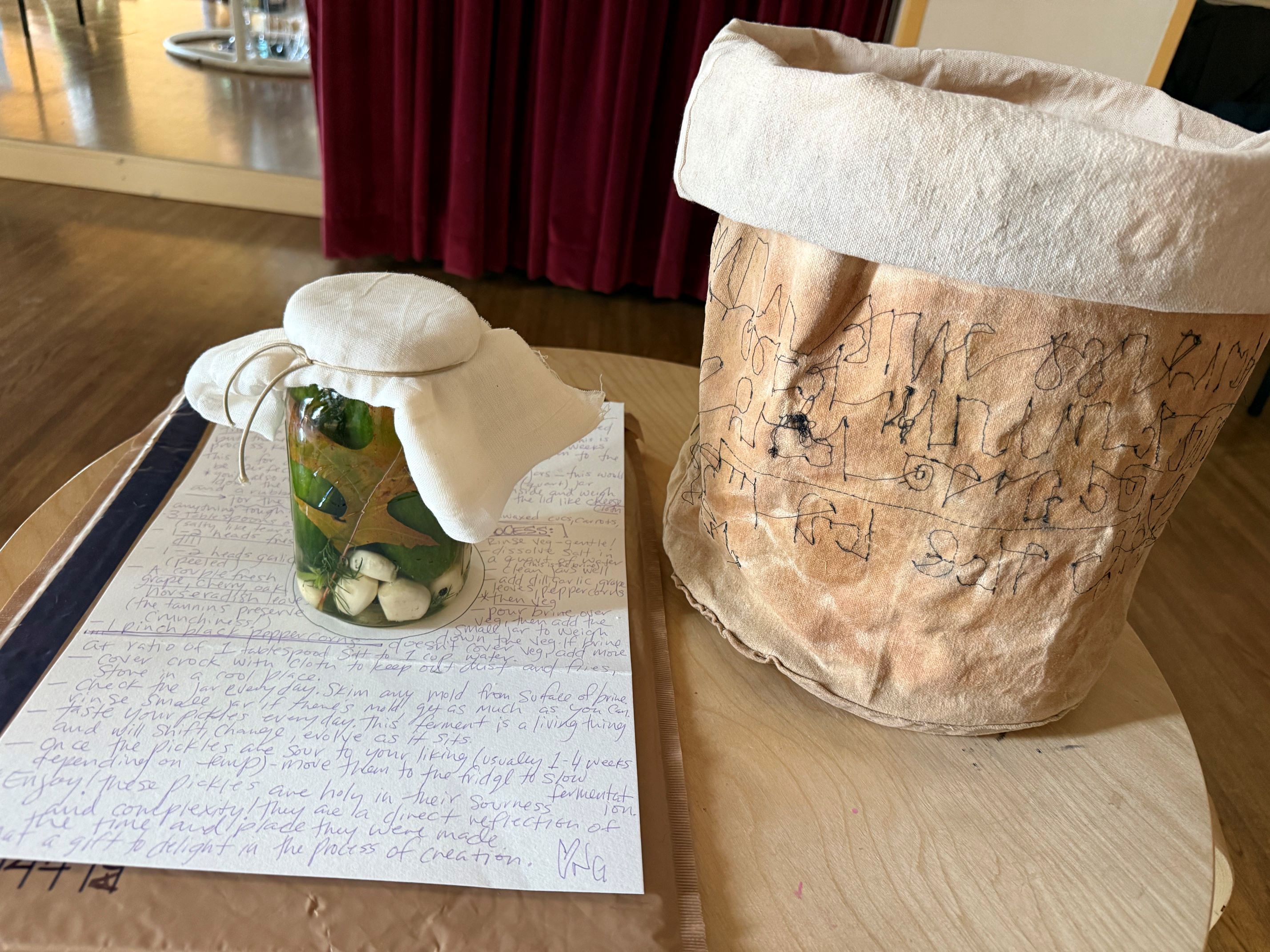
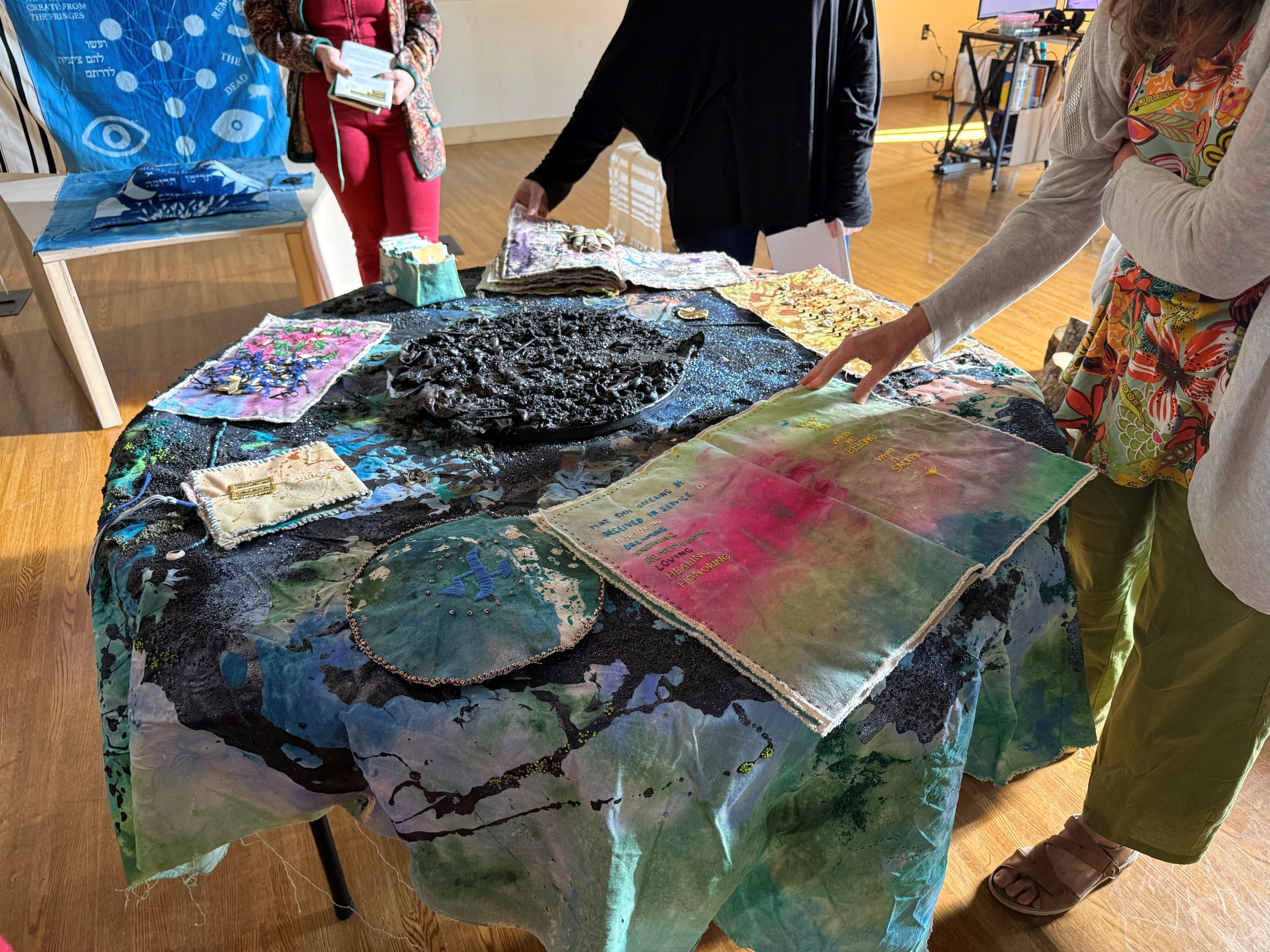
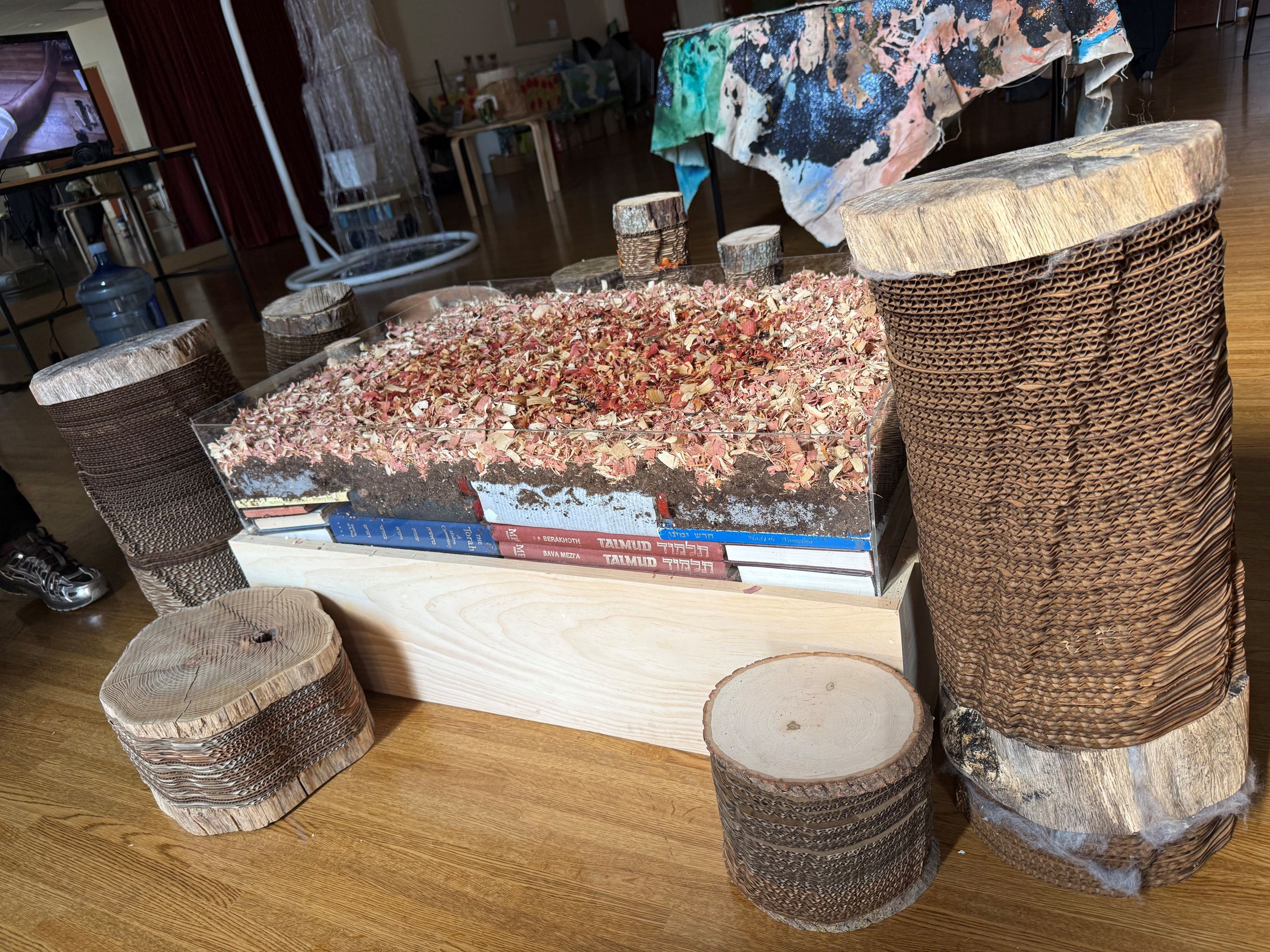
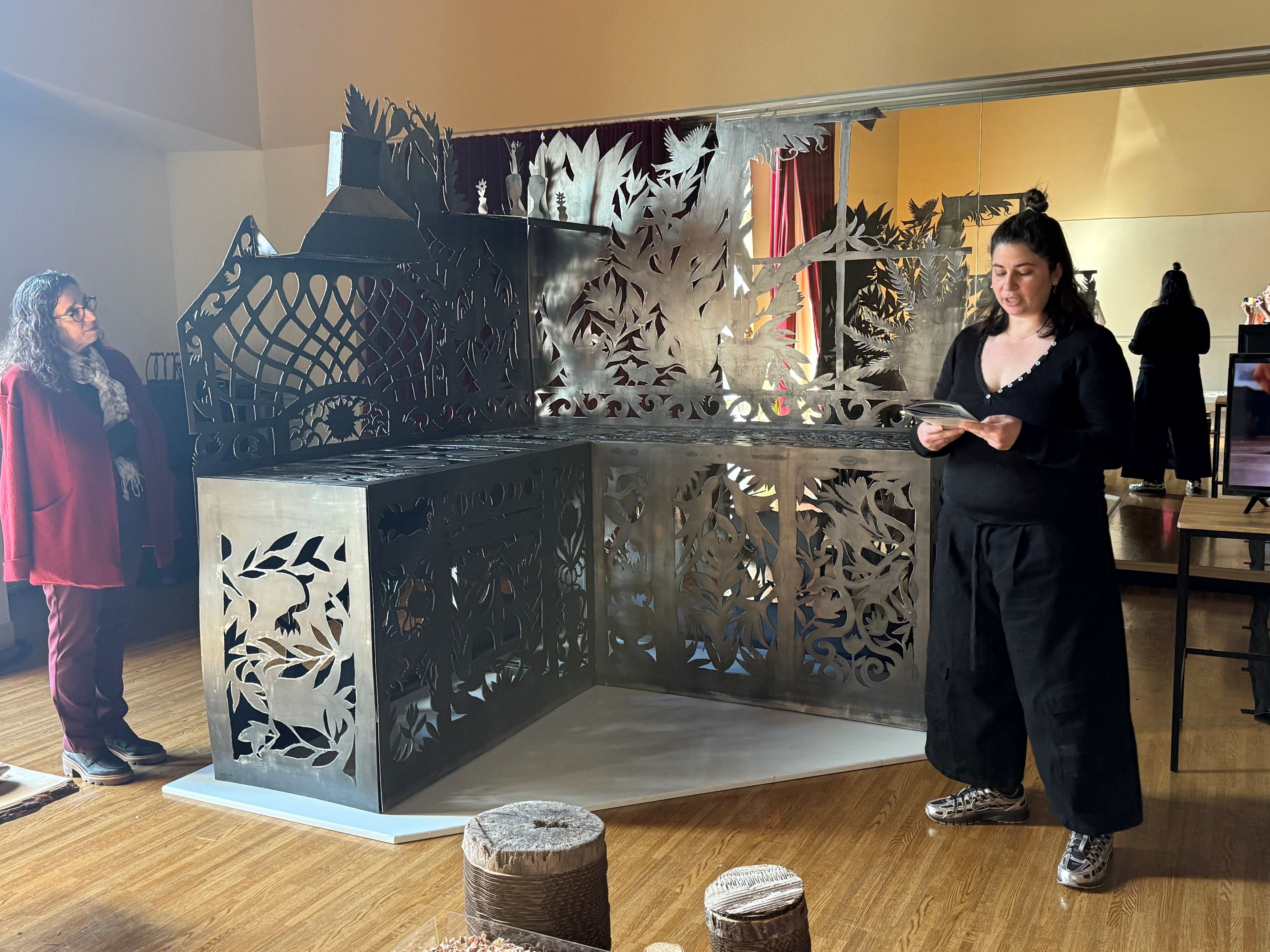
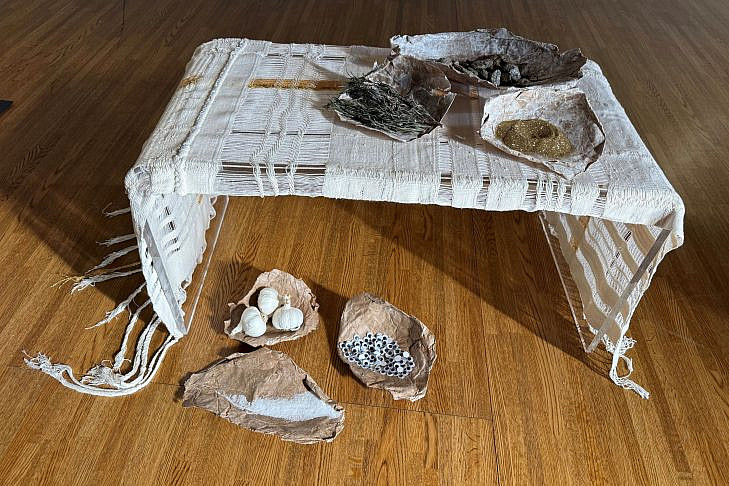
The title draws on the “70 faces of Torah,” echoing the 70 nations and 70 languages of Jewish tradition, celebrating humanity’s diversity. Through the scent of pickles and challah, the sound of family voices and electronica, and the presence of living seeds, this multi-sensory exhibit brings community and ritual to life. Its interplay of technology and organic materials offers a reminder: technology can spark innovation, but people make it communal. Listening to Rubensteen, I took note of what participating artist Avila Eytan do Espirito Santo said: “In this exhibition we’re creating a reverse archive of Jewish life.” These are a few pieces that really struck me: I have encountered Nikki Green through her ceramic works, so her hand-embroidered canvas vessel sealed with beeswax caught my eye. Her attempt to evolve her work to be less fragile and more movable intrigued me, but what drew me to it was the Hebrew lettering hand-embroidered all across it, written from the inside of the vessel. Meanwhile, pickles ferment during the exhibition, adding an unexpected living element to the piece, connecting us back to a long and evolving tradition of pickling as a source of physical and communal nourishment. In Detroit-based artist Olivia Guterson’s work, you encounter a wide array of found and discarded materials (nails, Legos, pistachio shells, and more) woven and collaged into a table of offerings, blessings, and invitations to play. Guterson describes these offerings as “a place for pausing, sensing, remembering, and imagining.” I had the great fortune of meeting Guterson just days before experiencing this work, and I’m struck by her use of found objects and upcycling to create a beautiful and engaging work that viscerally and tactically illuminates Jewish values. Beverly Sky’s “Geniza for a Forest” is an impeccably constructed piece that gives a whole new look at the geniza, the space where we bury holy Jewish books at the end of their lives. Tree stumps, a bench, and a vitrine holding damaged sacred texts sit alongside soil planted with approximately 70 sunflower seeds, planted during an opening ceremony with artists and participants. As I look at the old holy books being warped by moisture, I can’t help but feel like we’re destroying these books, and yet we’re honoring them by sending them back to the earth, like burying a body. With a towering presence, Isabel Mattia’s piece “Amulet far der kikh” (“Brisket’s in the oven”) drew me in immediately because of my love of paper-cutting. A life-size kitchen stove and counter made of welded steel, inspired by the most delicate paper cuts, bring the literal weight to the show. The piece celebrates the kitchen as a central part of tradition across generations, with a playful rat, cow, Shabbat candles, and other fun hidden cutouts that illustrate the centrality of the kitchen, food, and family in Jewish life. In the show, I see reminder after reminder that while technology may be a necessary tool of innovation in our time, the core, strength, and true power of Judaism and ritual lie in how they connect and impact people, and that basic human needs are a necessary seed of Jewish life that can grow in many different environments. Leviss told me: “When we began planning for this exhibition, we knew how eager our communities were for more expansive, imaginative conversations about what our futures, Jewish and otherwise, could be. And we knew that artists are and should be leading the way in those conversations. But we could not begin to imagine how many community members, across identity, ideology, geography and generation, would come and engage with the artists’ offerings and the exhibition programming. It is so inspiring to see how many of us want to dream, and to dream in community with each other. We’re so excited for what will continue to unfold over the next 10 days of the in-person exhibition and beyond, with online exhibition programming and hopefully, future iterations!” “70 Seeds” is on view Oct. 27 to Nov. 8, 2026, at Nicholas Martin Hall in the Calderwood Pavilion at Boston Center for the Arts. Admission is free; check visiting times and RSVP through the exhibition’s event listings.
This post has been contributed by a third party. The opinions, facts and any media content are presented solely by the author, and JewishBoston assumes no responsibility for them. Want to add your voice to the conversation? Publish your own post here.
MORE
Related