





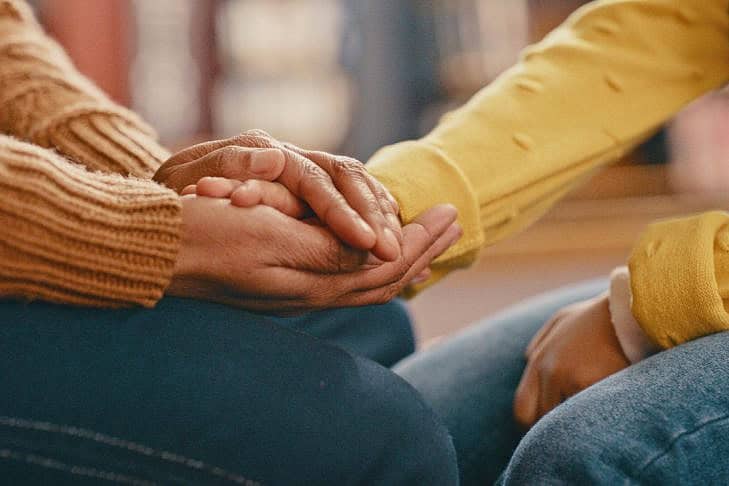
In a world where very little is taboo, talking about death is still so often painful, awkward or perceived as something to avoid. Mortality is frightening. Finding community while devastated can be daunting. And, until you’ve confronted sickness, the mere concept of death can seem abstract.
The Shomer Collective, an organization devoted to using Jewish wisdom to change the conversation around death and dying, aims to ease these barriers with its new Shiva Circle program, coming to Boston next month.
Central to the program is the Jewish practice of shiva—Hebrew for “seven”—the seven-day period of mourning that begins once a family returns home from a funeral. During shiva, mourners stay home while friends, neighbors and community members bring food, offer comfort and help with daily needs. The ritual creates a structured pause, making space for grief while surrounding people with support at the moment they need it most.
The nationwide Shiva Circle program trains volunteer shiva guides, who come from diverse Jewish backgrounds and don’t need prior expertise—just compassion. Volunteers learn Jewish mourning basics, listening skills and how to collaborate with people navigating grief. After training, mourners can connect with guides through partner synagogues, JCCs, funeral homes, Jewish family services and more. Each guide typically provides up to four hours of support per mourner, on a flexible, opt-in basis. Whenever there’s a need, an email goes out to the volunteer network, and guides can step in as their schedules allow.
“Tomorrow is never guaranteed for any of us. How do we take that knowledge and use it to prepare for the fact that we are all going to die, and we are all going to grieve?” says Shiva Circle’s Rebecca Missel. “We live in a world with so few certainties, so few guarantees and so many ambiguities. I think there is something really powerful and beautiful in that universality” of talking about the experience, she says.
In 2023, Shomer Collective surveyed a range of Jewish clergy, hospice workers, synagogue leaders, death doulas and more, and found that many Jews now struggle to sit shiva because knowledge of the rituals hasn’t been well transmitted—especially for people far from family, in multi-faith homes or without strong Jewish networks.
Shiva Circle addresses this with a three-part approach. In addition to training shiva guides, they offer key information on their website explaining what shiva is and how to participate. They also provide digital tools that help organize meals, minyan needs and logistical support, so mourners don’t have to manage everything themselves when they’re already overwhelmed.
“We need caring individuals who want to be able to help mourners: listening to them, helping them to prioritize their needs, rallying their network of support. They’re almost like an air traffic controller,” Missel says.
Guides typically work in pairs or trios.
“Some people are amazing at logistics, and some people are amazing at emotional support. We don’t expect one person to be expert in all of these things,” she says.
Sound intriguing? Boston’s volunteer program kicks off on Dec. 1 at noon with a virtual info session, followed by an in-person, 5.5-hour training on Sunday, Dec. 7, at 9:30 a.m. at Mayyim Hayyim in Newton, or on Monday, Dec. 8, at 10 a.m. at Temple B’nai Abraham in Beverly.
Related