




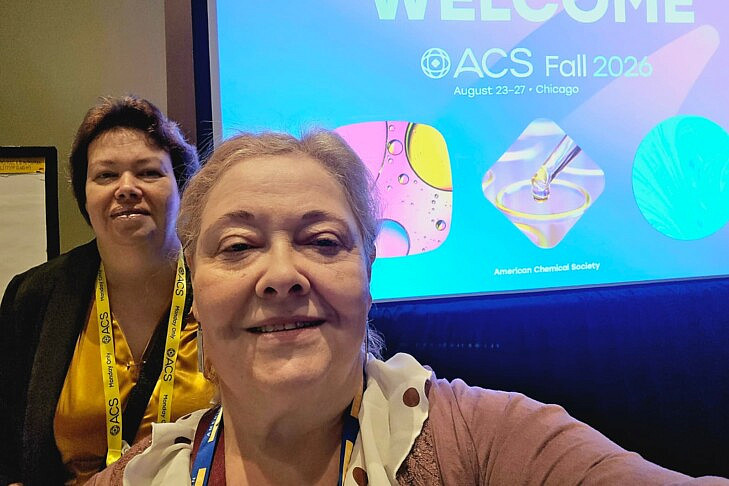

Most people probably do not think of a Jewish community organization when they imagine a major chemistry conference.
They picture university laboratories, research papers, chemical structures, new technologies, and rooms filled with scientists discussing discoveries that may shape their fields’ future.
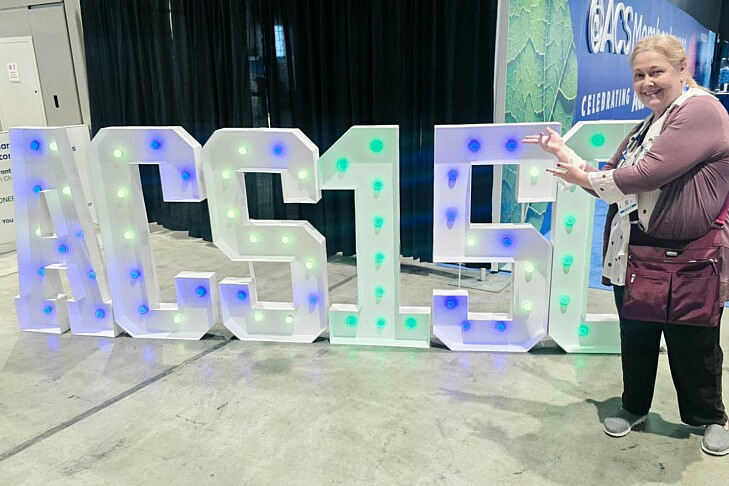
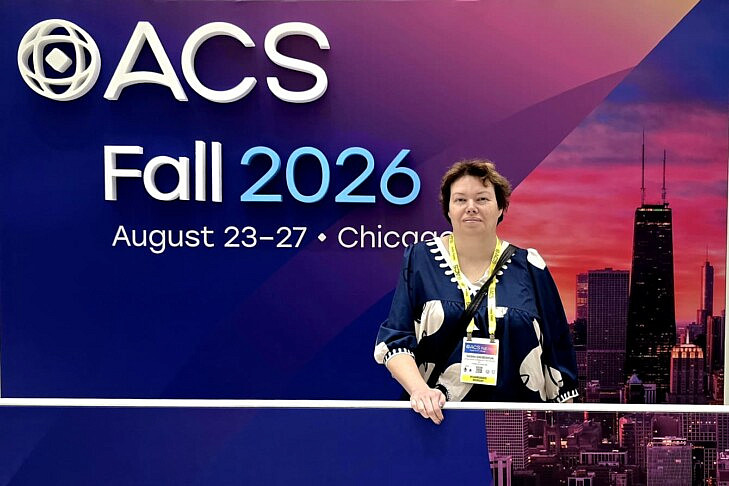
And, of course, that was very much the atmosphere at ACS Fall 2026, the national meeting of the American Chemical Society, held August 23–27 in Chicago. The meeting brought together thousands of chemists, researchers, educators, students, and industry professionals from around the world.
And somewhere in that enormous scientific gathering was Jookender. Together with Dr. Victoria Volkis, Professor and MS Chemistry Program Director at the University of Maryland Eastern Shore (UMES), I had the opportunity to present our collaborative work connecting several STEM education and research programs into what we call a “vertical community of motivated interdisciplinary learners.”
For Jookender, being part of this presentation was meaningful for a very particular reason. We are not a university. We do not operate a chemistry laboratory. Our role in these programs is different. Jookender works on the human infrastructure that makes these opportunities possible: recruiting students, communicating with families, helping young people navigate the application process, coordinating logistics, and supporting participants as they move through programs that can sometimes feel far from their everyday lives.
That work has given us a close view of something that does not always appear in research data. Before a student can become a scientist, they first have to imagine that they belong in the scientific world.
From a Program to a Community
The model presented at the conference connects students at different stages of their educational journeys.
High school students participating in ACS Project SEED and the USDA-supported ASTEMA/FANE program learn alongside undergraduate students in REEU. Undergraduate students work with graduate students. Graduate students interact with faculty, researchers, educators, farmers, extension professionals, and other experts.
The idea is deceptively simple: one generation teaches the next.
A high school student does not only see a professor at the front of a classroom. They also meet an undergraduate student who was recently where they are now. That undergraduate works beside a graduate student. And everyone becomes part of a larger scientific community.
In this environment, research stops looking like something that belongs to “other people.”
There is a visible next step.
And then another one.
For an organization like Jookender, this matters especially. Much of our work with teenagers and young adults is built around the idea that education is not simply about delivering information. Young people need relationships, confidence, opportunities to try something unfamiliar, and people around them who can quietly demonstrate: Yes, there is a place for you here.
That principle is familiar to us from Jewish community building as well. Community does not emerge because people occupy the same room. It grows when people learn from one another, help one another, take responsibility, and eventually become the people who welcome the next group.
The laboratory and the Jewish community center may look very different, but this particular human dynamic is surprisingly similar.
But How Do We Know It Works?
My portion of the presentation focused on another question: evaluation. I represented Jookender at the conference, but my professional background also includes program evaluation. That made one particular approach used with students especially interesting to me: context-independent game-based evaluation.
The concept does not replace traditional formative or summative evaluation. The questions, indicators, criteria, analysis, and standards of rigor remain. What changes is how we collect some of the evidence.
Consider a familiar evaluation question: Did the student develop leadership skills? We could ask. But we could also create a situation in which leadership has an opportunity to appear.
One example we discussed at the conference was a survival-island challenge. Students are told that they are stranded on an island, rescue will not arrive for a month, and they have only limited resources.
Almost immediately, something interesting happens. One student asks about drinking water. Another asks about the climate. Someone begins organizing the group. Someone challenges an assumption. Someone listens quietly before proposing a solution. Someone calculates risk. Someone thinks only about tomorrow while another starts planning for week four.
Nobody has been asked, “Are you a leader?” They are simply trying to survive the imaginary island. And yet leadership, scientific reasoning, communication, planning, risk assessment, and teamwork suddenly become visible.
Another activity sounds even less scientific: teams build sand fortresses. There are no molds or tools. The structures are tested. Strategies fail. Teams adjust. People negotiate. Someone has to decide whether to defend an idea or abandon it. What becomes observable is not knowledge of sandcastles.
It is collaboration, creativity, engineering thinking, adaptation—and something every scientist understands very well: what a person does when the first solution fails. That last part matters. Science, after all, is not a profession built around always being right the first time.
What Jookender Brought to the Room
Standing at a national chemistry conference representing Jookender made me think about our role somewhat differently. Community organizations are often described as the organizations that “help recruit participants” or “handle logistics.” Both descriptions are accurate. We do those things.
But partnership can mean something deeper. Universities bring laboratories, faculty expertise, research infrastructure, and scientific knowledge. Community organizations bring relationships.
We know families. We know students before they enter the laboratory. We hear their hesitation before they apply. We know when a teenager is excited, intimidated, confused, or ready for a larger challenge. And we often remain connected to them after a particular program ends.
Neither side replaces the other. The interesting work happens when those strengths meet.
Jookender has previously introduced Greater Boston families to these UMES STEM opportunities through recruitment events with Dr. Volkis, including programs designed for high school and college students. What began as helping young people find educational opportunities has gradually become something broader: participating in the conversation about how those opportunities themselves can be structured, connected, and evaluated.
For me, that was perhaps the most meaningful part of being at ACS Fall 2026. We were not there because Jookender suddenly became a chemistry organization. We were there because educating a future scientist requires more than chemistry. It requires teachers and researchers, certainly. But it also requires mentors, families, community partners, opportunities to belong, room to fail, and someone willing to open the first door.
Sometimes building the next generation of scientists begins in a laboratory. And sometimes it begins in a community.
This post has been contributed by a third party. The opinions, facts and any media content are presented solely by the author, and JewishBoston assumes no responsibility for them. Want to add your voice to the conversation? Publish your own post here. MORE