





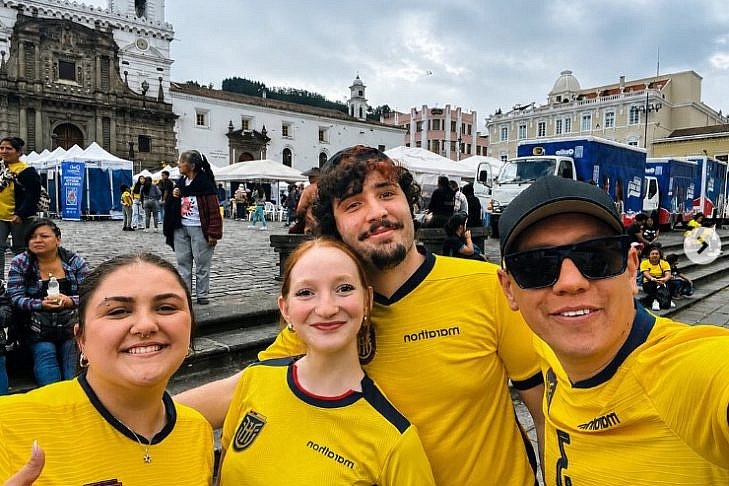
When people think about group travel, they often imagine beautiful scenery, memorable photographs, and exciting adventures. Those things certainly matter. Ecuador gave us all of that and more. We explored the historic streets of Quito, crossed the breathtaking Andes Mountains, ventured deep into the Amazon rainforest, and experienced the extraordinary wildlife of the Galápagos Islands. Every destination offered something unique, and every day brought new discoveries.
Yet, by the end of the journey, many participants agreed that the most meaningful part of the experience had very little to do with geography. It was about people.
This trip became a reminder that traveling together creates a unique environment where friendships develop naturally, conversations become deeper, and community begins to form in ways that are difficult to recreate in everyday life. Living together for nearly two weeks meant sharing meals, helping one another through unexpected situations, celebrating small victories, laughing together, and simply having time for conversations that rarely happen in the rush of normal schedules.
Our group itself reflected something we have been intentionally building within Jookender—a truly intergenerational Jewish community. Approximately 45% of participants were young adults aged 21 to 27, another 20% were adults under 40, 20% were teenagers, 10% were parents accompanying their teens, and 5% were empty-nesters. Although these generations often participate in separate programs, travel naturally brought them together. Teenagers sought advice from older participants. Young professionals shared their experiences with students preparing for college. Parents and empty-nesters became mentors, listeners, and friends rather than simply older adults in the room. Age quickly became secondary to shared experiences.
One of the most encouraging outcomes was welcoming so many new faces into the community. Nearly half of the participants had never traveled with Jookender before. Some had attended only one previous event, while others had never participated in any community activities at all. The trip became their doorway into Jewish communal life.
Perhaps the most remarkable outcome came after everyone returned home. Every one of those new participants—100%—took another step into Jewish life. Some joined ongoing Jookender programs and activities. Others chose to support Jewish causes through volunteering or charitable giving. While not every donation was made directly to Jookender, every participant found a meaningful way to continue investing in the Jewish community after the trip ended.
For us, this demonstrates that travel is not simply another community activity. It is often the beginning of a much longer journey.
One lesson became especially clear throughout the experience. Travel itself is already highly attractive. People naturally want to explore the world, visit remarkable places, and experience different cultures. Because of that, Jewish organizations have an opportunity—and perhaps even a responsibility—to build something deeper around those experiences.
Travel should not be viewed simply as tourism. It can become a platform for Jewish learning, Jewish identity, and Jewish peoplehood.
Throughout our journey, we intentionally incorporated Jewish themes into conversations, reflections, and shared experiences. Sometimes this happened formally through discussions and group activities. More often than not, it happened naturally over dinner, during long bus rides, while hiking together, or while watching the sunset over the Pacific Ocean. Participants spoke about Jewish identity, family traditions, community, history, values, and what it means to belong to something larger than ourselves. These moments could not have been scheduled. They emerged because the environment allowed them to.
Another important lesson involved group size. Larger trips can certainly be exciting, but we discovered that smaller groups create something different. People spend more time with one another instead of remaining within familiar circles. Conversations become more personal. Everyone has the opportunity to contribute. New friendships form more quickly, and participants feel seen rather than anonymous.
The sense of Jewish peoplehood grows strongest when people genuinely get to know one another. That observation will shape the future of our travel programming.
Rather than focusing on increasing the number of participants, we intend to continue emphasizing experiences that encourage authentic relationships, meaningful conversations, and lasting community connections. We believe that depth often matters more than size.
The Ecuador journey also reinforced another tradition that has become part of Jookender’s approach to travel: we never simply repeat the same itinerary. Every destination offers different opportunities for learning, discovery, and relationship-building. By continually exploring new parts of the world, participants remain curious, engaged, and excited for what comes next.
Every new destination becomes another chapter in our collective story. Every journey introduces new friendships. Every shared experience strengthens our community.
Looking back, Ecuador was not simply a successful travel program. It became an example of how thoughtfully designed travel can bring together multiple generations, welcome newcomers, strengthen Jewish identity, inspire ongoing community participation, and encourage people to continue contributing long after the suitcases have been unpacked.
The mountains, rainforests, islands, and historic cities of Ecuador were unforgettable. But the relationships built there may prove to be the most lasting of all.
This post has been contributed by a third party. The opinions, facts and any media content are presented solely by the author, and JewishBoston assumes no responsibility for them. Want to add your voice to the conversation? Publish your own post here. MORE