




Sure, we know that Jews are everywhere. But for many of us in the United States, that means Boston, New York, and Philadelphia. And some other places, plus Israel. And maybe some vague references to the “old country” from our grandparents.
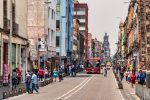
What does it mean to grow up Jewish far from the familiar centers of American Jewish life? For Alex Chelminsky and Josette Capriles Goldish, the answer begins in two very different places: Mexico City and Curaçao. Their stories open a window onto Jewish communities shaped by migration, memory, reinvention, and a stubborn refusal to disappear.
The community they built was remarkable. Jews from Eastern Europe, the former Ottoman Empire, Syria, Lebanon, North Africa, and elsewhere brought languages, foods, customs, and institutions with them. They created schools, synagogues, cultural organizations, newspapers, social service agencies, and a massive Jewish sports center that served as a powerful gathering place across communal lines. For many families, Jewish life in Mexico was not occasional; it was woven into daily life. Alex describes the Mexican Jewish community as one deeply committed to preserving identity. In earlier generations, even different Jewish groups—Ashkenazi, Sephardic, Syrian, Damascus, Hungarian, German, Yiddish-speaking, Zionist, non-Zionist—often maintained separate schools and synagogues. Over time, many of those boundaries softened, but the impulse behind them tells a larger story: in a new and unfamiliar country, Jews rebuilt the worlds they had lost. Josette Capriles Goldish brings us to another corner of the diaspora: Curaçao, an island just off the coast of Venezuela with one of the oldest Jewish communities in the Americas. Born and raised there, Josette grew up in a secular Sephardic Jewish family connected to a community whose roots reach back to the 17th century. Jews from Spain and Portugal, after generations of flight from the Inquisition and resettlement in the Netherlands, came to Curaçao under Dutch rule and helped shape the island’s commercial and cultural life. Curaçao’s Jewish community flourished as traders, ship owners, merchants, and civic contributors. By the mid-18th century, Jews made up a striking share of the island’s white population. The community supported its own members, sustained synagogue life, and participated in the broader culture of the island. Josette’s own family history includes stories of salons with music, poetry, conversation, and visitors from across the Caribbean and Europe. Yet growing up Jewish in Curaçao did not look like growing up Jewish in Boston, New York, or Mexico City. Josette recalls a secular upbringing, long periods without a rabbi, limited Jewish education, and foods and customs that reflected the Caribbean and Latin world around her. Bagels, matzo balls, and gefilte fish were not childhood staples. They were discoveries she encountered later in the United States. Together, Alex and Josette remind us that there is no single diaspora story. Jewish identity has been carried in Yiddish schools and Sephardic melodies, in Mexican sports centers and Caribbean synagogues, in archival photographs and family recipes, in memories of exile and in the everyday work of building community. Their stories are not footnotes to Jewish history. They are Jewish history: surprising, local, resilient, and alive. Join us at 7 p.m. on May 31 at the Walnut Street Minyan (858 Walnut St., Newton) to hear Alex and Josette share their experiences growing up Jewish beyond the familiar borders of American Jewish life, in two vibrant diaspora communities with histories as rich as they are unexpected.
This post has been contributed by a third party. The opinions, facts and any media content are presented solely by the author, and JewishBoston assumes no responsibility for them. Want to add your voice to the conversation? Publish your own post here.
MORE
Related