




As a kid, I don’t remember a cellist playing the Yom Kippur evening Kol Nidre service. Then I went to college, and I felt like an alien when all my friends said, “Kol Nidre is the best service because of the cello!” This feeling was only exacerbated when I began dating my husband and his mother was proud to immediately share that he was a cellist who had played Kol Nidre all through high school.
This path to understanding what I now think is the most beautiful Jewish service of the year also helped me realize what a phenomenon the service really is. A muse of the art and music world, cellists across the world call Kol Nidre a seminal work, one that captures the depth, vulnerability, and strength of the cello itself.
So, what is Kol Nidre, exactly? Meaning “All Vows,” it’s the haunting opening of Yom Kippur, a moment that viscerally evokes the feeling of atonement. It actually isn’t a prayer, but a legal formula chanted in Aramaic, asking that unkept vows to God be released. Different from other liturgy, a core element of Kol Nidre is the melody—long, weeping phrases rise and fall like breath, echoing centuries of yearning, forgiveness, and hope.
Traditionally, it’s sung three times by a cantor before a silent congregation as dusk falls. For many, the moment marks the true beginning of Yom Kippur. As is the power of art and music, it’s pretty amazing to hear the cello usher in the feelings we seek to express on the day of atonement.
Beyond the sheer power of the music on Kol Nidre, what has surprised me most was learning that this same melody resonates just as powerfully beyond synagogue walls, especially among musicians.

How did this happen? In 1880, the German composer Max Bruch, who wasn’t Jewish, heard the melody of Kol Nidre and was so struck by its depth that he used it as the foundation for a new composition: “Kol Nidrei, Op. 47,” written for cello and orchestra.
Bruch’s version transforms the melody into something universal. The solo cello takes the role of the cantor’s pleading, meditative, and intimate voice, and makes the orchestra the congregation, responding and echoing with reverence. The music moves between confession and redemption, sorrow and transcendence.
For over a century, this work has stood as one of the most beloved pieces in the cello repertoire. It’s performed by students and professionals alike, by Jewish and non-Jewish musicians around the world, each finding something personal in its mournful, searching lines.
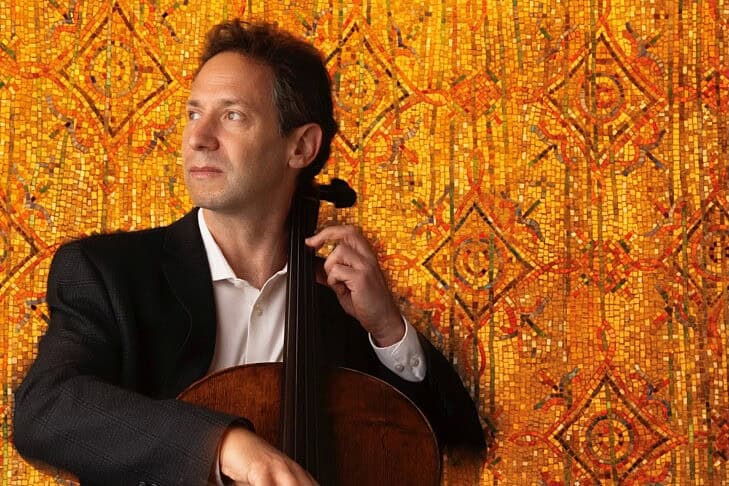
I asked cellist Aron Zelkowicz about this tradition, and he told me that the cello has long served as an instrumental stand-in for the tenor voice of a cantor in Jewish music, especially in Reform congregations. Max Bruch’s concert piece “Kol Nidrei” can certainly be credited as an original source of this tradition, as it perfectly utilizes the cello’s expressive qualities to convey an ancient vocal melody. He inspired many other classical composers to use the cello to evoke the Jewish musical soul, such as Ernest Bloch, Leo Zeitlin, Joachim Stutschewsky, and Joseph Achron.
For players, it’s more than a showcase of sound; it’s an exercise in empathy. The piece demands deep listening and restraint, a sensitivity to silence as much as to tone. Even for musicians with no connection to Judaism, performing “Kol Nidrei” feels like entering sacred territory. In that way, the Kol Nidre service bridges faith and art. It reminds us that sacred music doesn’t belong only to those who practice the faith it comes from, but it belongs to everyone moved by its beauty. Hearing the cello sing “Kol Nidrei” is a reminder that music carries memory across boundaries. And just as the cello features a collaboration between past and present, so does the space of The Vilna Shul. Want to experience this for yourself? Join us for the Kol Nidre service at The Vilna, where award-winning cellist Aron Zelkowicz will bring his deep and soulful cello sounds to the historic Vilna Shul sanctuary on Sunday, Sept. 20. Register here.
This post has been contributed by a third party. The opinions, facts and any media content are presented solely by the author, and JewishBoston assumes no responsibility for them. Want to add your voice to the conversation? Publish your own post here.
MORE
Related