





“Whoever saves a single life, it is as if they have saved an entire world.”
—Sanhedrin 4:5
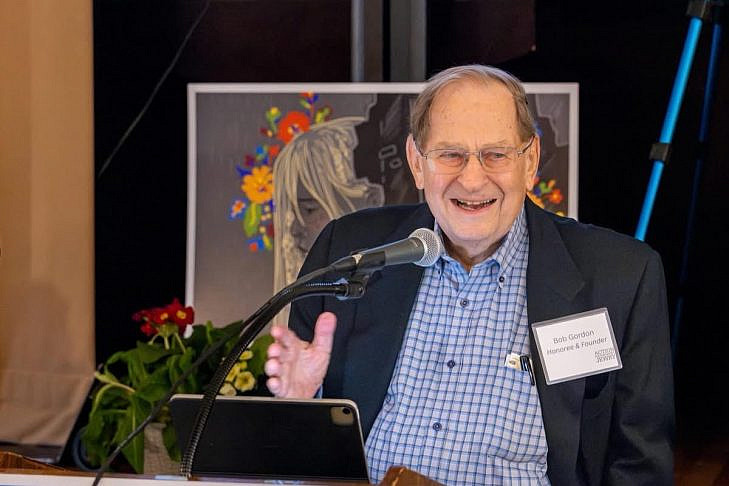
Last week, we lost a giant with the passing of Robert Gordon, z”l—founder of Action for Soviet Jewry in Boston, later Action for Post-Soviet Jewry. At the time, I wrote about the Bob I knew: our founder, my mentor, my friend, and one of Action-PSJ’s most steadfast champions.
Then I attended his funeral, and I read his obituary.
And I realized something.
I thought I knew Bob’s story. In truth, I knew only the chapter in which our lives intersected. His obituary reminded me that Bob’s life was far larger than I had understood. Action-PSJ was an important chapter, but only one expression of a lifetime devoted to service.
Bob’s commitment to the Jewish people was rooted in the values of a generation shaped by the Holocaust. He understood what happens when good people remain silent—and what becomes possible when ordinary people choose to act. Those values didn’t live in one part of his life; they shaped every part of it. They guided the way he conducted business, built friendships, raised his family, invested in his community, and dedicated more than 50 years to helping Jews in the former Soviet Union reclaim lives of freedom, dignity, and Jewish identity.
For those who weren’t part of the Soviet Jewry movement, it is difficult to appreciate what ordinary citizens accomplished. Students, rabbis, homemakers, business leaders, elected officials, and activists came together to demand freedom for Jews trapped behind the Iron Curtain. Bob was one of those builders. He helped establish Boston Action for Soviet Jewry, later served as president of the Union of Councils for Soviet Jewry, traveled to Moscow, organized campaigns, built coalitions, and never stopped believing that ordinary people could change history.
Since Bob’s passing, I’ve heard from people who knew him through every stage of his life. Three words surfaced again and again: giant, mensch, and haimish.
The more I reflected, the more I realized these weren’t three different descriptions. They explained one to another. Bob was a giant because he lived as a mensch. And despite everything he accomplished, he remained deeply haimish—warm, approachable, humble, and always willing to do the work.
One of Bob’s closest friends said something that has stayed with me all week:
“Just imagine the ripple effects.”
That is exactly what I’ve been doing.
For the past four years, much of my writing has focused on Ukraine during wartime—the elderly sheltering from missile attacks, telehealth visits connecting isolated seniors with physicians, emergency food deliveries, and the remarkable resilience of the Jewish community in Dnipro.
Only after Bob’s passing did I fully appreciate that these are also stories of Bob’s legacy.
The Jewish Medical Center, Beit Baruch, and the strong network of institutions that continue to care for vulnerable Jews in Ukraine did not appear overnight. They were built over decades through trusted partnerships, thoughtful leadership, and the quiet persistence of people like Bob Gordon. As our partners in Dnipro continue caring for their community under unimaginable circumstances, they are also carrying forward the work Bob helped begin.
Bob understood something that continues to guide Action-PSJ today: no single organization solves a complex problem alone. He believed in partnerships. He invested in people. He trusted others to lead. He understood that institutions matter because people matter.
I saw that leadership firsthand.
Changing a 50-year-old organization has never been easy. When COVID—and then Russia’s full-scale invasion of Ukraine—forced Action-PSJ to rethink nearly everything we did, Bob understood that remaining faithful to our mission sometimes meant changing our methods. He never confused loyalty to the mission with loyalty to yesterday’s way of doing things.
He listened carefully, spoke thoughtfully, and had a remarkable ability to help people find common ground. His influence never came from being the loudest voice in the room. It came from the trust he had earned over decades.
A few years ago, in his 80s, Bob became concerned that the story of the Soviet Jewry movement might be forgotten. Rather than lamenting it, he founded the Soviet Jewry Movement Education Project and invited many of us—including me—to help preserve that history for future generations.
History, he believed, does not preserve itself.
People preserve it.
One memory captures Bob better than almost any other.
At Action-PSJ’s 50th anniversary celebration this past April, hundreds of guests were expected. Volunteers hurried to prepare the room. Bob and Doris arrived early.
Not to be honored.
To help.
When I looked across the room, there they were, putting chair covers on hundreds of chairs alongside the volunteers.
That was Bob.
No task was beneath him if it helped move the mission forward.
Please explore this special exhibit celebrating the 50th anniversary of Action for Post-Soviet Jewry. This display offers a glimpse into the people, places, and impact of a small but mighty grassroots movement—one that has continuously stepped in where others could not. This exhibit was made possible by the generosity of Bob and Doris Gordon.
There is one final Jewish teaching that has echoed in my mind throughout this week:
“It is not your duty to finish the work, but neither are you free to desist from it” (Pirkei Avot 2:21).
Bob lived those words.
Just weeks before his passing, he sat with Action-PSJ’s Budget Task Force, helping shape the future of the organization he founded more than 50 years ago. And a few weeks earlier, Bob participated in a board meeting for the Soviet Jewry Movement Education Project. Bob never expected to finish the work, yet he never stopped doing what needed to be done.
He believed it was his responsibility to begin it, strengthen it, and invite others to continue it.
As I reflect on Bob’s life, I find myself holding three emotions at once: profound grief, deep gratitude, and an enduring sense of responsibility.
And as I imagine the ripple effects of his work:
They live in the families who found freedom because the Soviet Jewry movement refused to give up. They live in the institutions that continue to care for vulnerable Jews in Ukraine. They live in every volunteer, donor, board member, partner, and staff person who continues the work that Bob helped begin.
That is the ripple effect of a mensch.
May Robert Gordon’s memory forever be a blessing. May we honor him not only by remembering what he built, but by carrying forward the values that shaped his life—showing up, building partnerships, investing in people, and believing that ordinary people can change the world.
If you would like to learn more about Bob Gordon’s remarkable life, I encourage you to read his obituary as published in The Boston Globe through Legacy.com.
Debbie Kardon is the executive director of Action for Post-Soviet Jewry.
This post has been contributed by a third party. The opinions, facts and any media content are presented solely by the author, and JewishBoston assumes no responsibility for them. Want to add your voice to the conversation? Publish your own post here. MORE