





Hours before Rosh Hashanah, I went for a run on the banks of the Sudbury River. It was a great time for a run; it had cooled off like only a late September day can, the light breeze was blowing, and the leaves were hanging on to their greenness by the thinnest of threads. This particular route was a double loop that ended up being a little longer than a 5K, taking me through and around an apple orchard, open fields, and riverside trails, while encountering an occasional happy dog out for a stroll. Imagine a more perfect run—it will be hard.
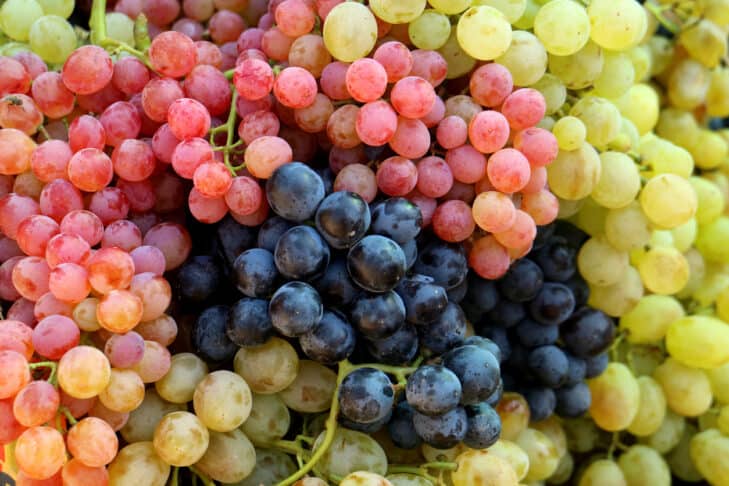
Midway through the first lap, I rounded a corner and ran smack into a delicious odor of wild Concord grapes. It was strong, but not too strong, and absolutely astonishing. Slowing down for a bit, I casually looked for the arbors, and somehow couldn’t find them, but I could imagine what the clusters looked like—hanging thick, heavy with their sweetness, some of them already splitting and releasing their fragrance. I didn’t see them, and I didn’t taste them, but the smell was enough to make me smile. It was still there on the second loop and hours later, when we raised the kiddush cup and recited the blessing borei pri ha-gafen, that memory lingered.
Until that moment, I had not considered how our blessing over wine is not only about drinking it, it’s about the whole experience of the fruit of the vine. It’s about the look of a vineyard ready for harvest, the tantalizing smell of grapes in the air, the sound of wine being poured, and the joy of savoring it in good company on a sacred (or non-sacred) occasion. And it all starts with the smell. We smell before we taste—one logically follows the other— and a good aroma sets the table for a pleasing experience.
Naturally, our tradition has something to say about this; the rabbis taught that smell itself is a form of spiritual nourishment. In the Talmud, Berakhot 43b, it is asked: “What is something from which the soul derives benefit, but not the body? That is fragrance.” Continuing down this path, Judaism has blessings specifically for smells, primarily borei minei besamim for the spices of Havdalah and hanoten re’ach tov bapeirot after smelling pleasing fruits. Also joining the conversation, and I know you’ve been tempted to say it while hiking through a grove of fresh pine trees, is borei atzei besamim, which you can recite upon smelling fragrant trees. Returning to grapes (and the Talmud), though, as evidenced by my sudden and unforeseen encounter with an invisible arbor, the scent of a grape, even before it is pressed, is already deserving of blessing.
Also from the Talmud, the sages add: nichnas yayin, yatzah sod: when wine goes in, secrets come out (Eruvin 65a). While there is certainly another way to interpret that pearl of Jewish wisdom, for the sake of this line of thinking, grapes, when pressed, reveal their hidden essence, and so do we. The High Holy Days press us, sometimes uncomfortably, until what is concealed inside emerges. Just as wine emerges from a grape, prayer emerges from us.
That fortuitous and grape-forward encounter along the Sudbury River became for me a kind of preview of the year ahead. It reminded me that holiness doesn’t always come in the obvious form of what we see or taste; it can arrive unseen, fleeting but powerful, moving us in ways we can’t quite explain.
And perhaps that’s the truest lesson of the New Year—we never really know what the new year will bring. To completely twist the Unetaneh Tokef prayer, one might be tempted to ask what will ripen, what will remain hidden, what will inspire us, or what will surprise us along the way. If we pay attention, we might just discover that blessings often reach us before we even recognize their source.
This post has been contributed by a third party. The opinions, facts and any media content are presented solely by the author, and JewishBoston assumes no responsibility for them. Want to add your voice to the conversation? Publish your own post here. MORE