





Some stories invite us to look. Others ask us to listen. This season, the Isabella Stewart Gardner Museum gives us a chance to do both, bringing the story of Queen Esther to life through painting and music. I thought I knew the Purim story, but this exhibit has illuminated facets of Esther’s story that I never knew, like the simple fact that she was a heroine of Rembrandt’s time.
Through the exhibition, we see snapshots of how this ancient Jewish heroine inspired artists and audiences across faiths in the 17th-century Netherlands and are prompted to ask, “What did they see in Esther?” And as I think about the programming around this landmark exhibit, I’m also prompted to ask, “What was the soundtrack of this story?”
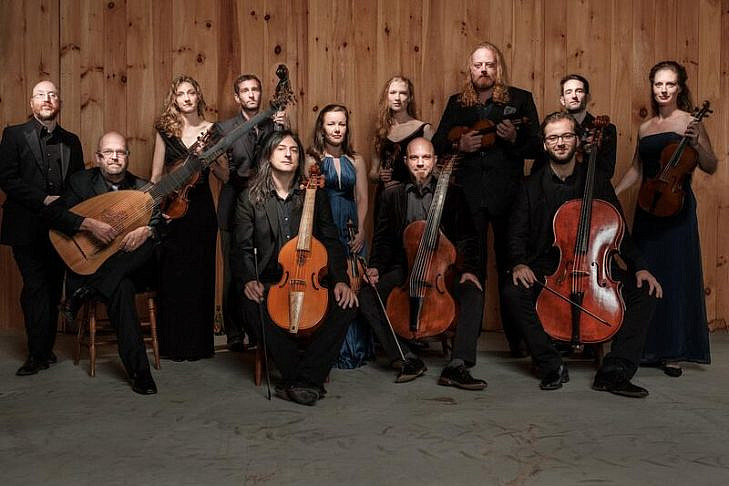
Well, lucky for me, the Gardner is giving us an opportunity to consider just this: as part of a season-wide series of events in partnership with The Vilna around “The Book of Esther in the Age of Rembrandt“ exhibit, the Baroque ensemble ACRONYM has also collaborated to help us hear the tones and textures of this story, and to dig into the 17th-century culture that was so unexpectedly influenced by Esther.
At the heart of “Esther in the Age of Rembrandt,” ACRONYM attempts to answer the question, “What’s the soundtrack for this exhibit?” Through a carefully curate performance, ACRONYM features three Esther cantatas by Giacomo Carissimi, Marc-Antoine Charpentier, and Élisabeth Jacquet de La Guerre. The program moves from Carissimi’s 17th-century “Regina Hester” and Charpentier’s “Historia Esther” to Jacquet de La Guerre’s “Esther,” written in 1708, extending the conversation beyond Rembrandt’s lifetime.
When I asked Gardner music curator George Steel, he told me: “It is thrilling to hear the music of unexpected composers of Rembrandt’s time. I am delighted that the concert offers a chance to hear the music of Leonora Duarte, a wonderful conversa composer whose music one too seldom encounters. And to hear the story of Esther told and retold by Rembrandt’s contemporaries will make a fascinating corollary to our exhibition.” Another significant composer elevated in this is Salamone Rossi, a Jewish composer at the Mantuan court known for pioneering Hebrew-language synagogue music, which adds another connection. Alongside Duarte, he brings Jewish history into the program through the composers’ own lives. For me, that makes this pairing of exhibition and concert especially compelling: a familiar story, with more people, perspectives, and possibilities to discover. I’m curious to hear what stays with me afterward.
This post has been contributed by a third party. The opinions, facts and any media content are presented solely by the author, and JewishBoston assumes no responsibility for them. Want to add your voice to the conversation? Publish your own post here.
MORE
Related